Waukesha Epoxy Flooring has spent more than 20 years installing epoxy flooring in Burlington and across southeastern Wisconsin, and a good share of that work sits in buildings where the slab we coat shares a doorway or a threshold with a floor we must leave alone. Knowing exactly where a resin system ends is as much a part of the scope as knowing how it goes down.
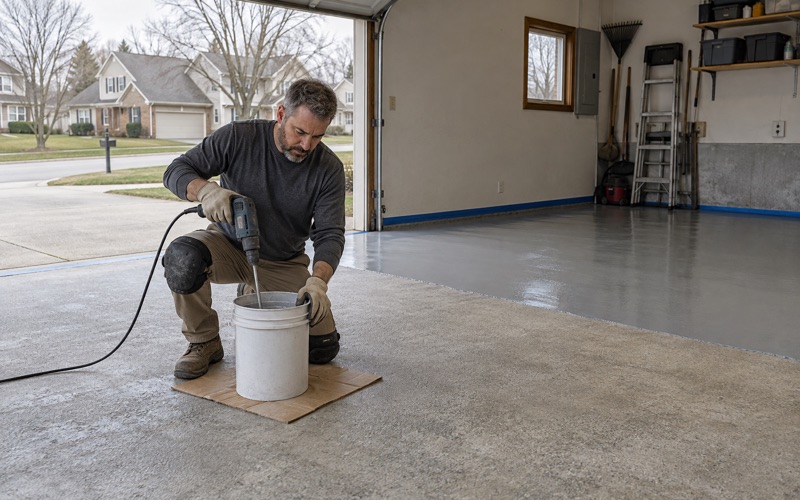
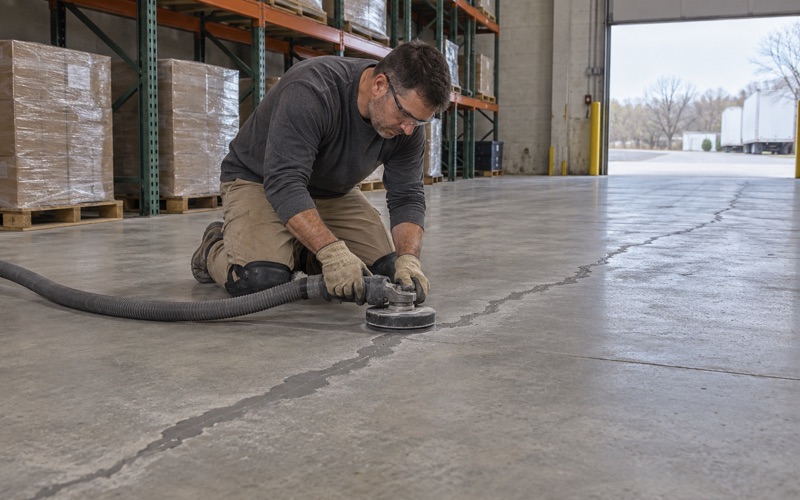
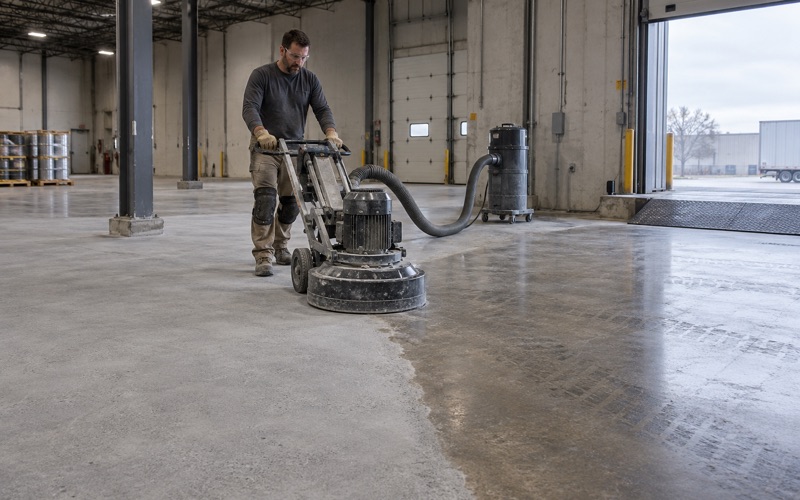
Every slab we take on is opened mechanically with a diamond grinder or a shot blaster to a measured ICRI CSP profile, and we never acid etch. Moisture testing is written into the quote as its own line item, and the proposal names the product, the system build and the finished thickness, so an owner can hold what went down against what was sold.
Before we price anything, we walk the cracks, the joints and any old coating, and we say so plainly when a slab needs repair or replacement first. Warranty exclusions are read out before a contract is signed, with moisture rising from below named at the top of that list, so nobody learns about them after a floor fails.
A Brewery in the 1926 Interurban Terminal
Some of the most instructive floors in town are not ones we have worked on at all. They are floors that show, in a single building, why a resin contractor has to know what it is standing on before a grinder is switched on.
The depot on North Pine Street
Low Daily Brewing at 700 N. Pine Street brews inside a depot The Milwaukee Electric Railway & Light Co. built for its interurban line, a terminal a library record dates to a formal opening on December 4, 1926. The building later served Wisconsin Gas and Electric and then the Standard Press before it became a microbrewery with a large taproom and a beer garden out back with a stage for live music.
The renovation drew a WEDC Community Development Investment grant of about $171,000 toward $685,074 of eligible costs, passed through the city. We mention it because it describes the kind of building Burlington still has: an old public structure put back to work, where any new floor has to sit beside original fabric that was kept rather than torn out.
Two floors under one roof
The taproom fills the old ticket desk and waiting room, and the original terrazzo in the taproom is still there underfoot. Terrazzo is a finished floor in its own right, chips of stone set in a matrix and ground smooth when it was installed, and it is cared for with its own products and methods rather than treated as a base for anything else.
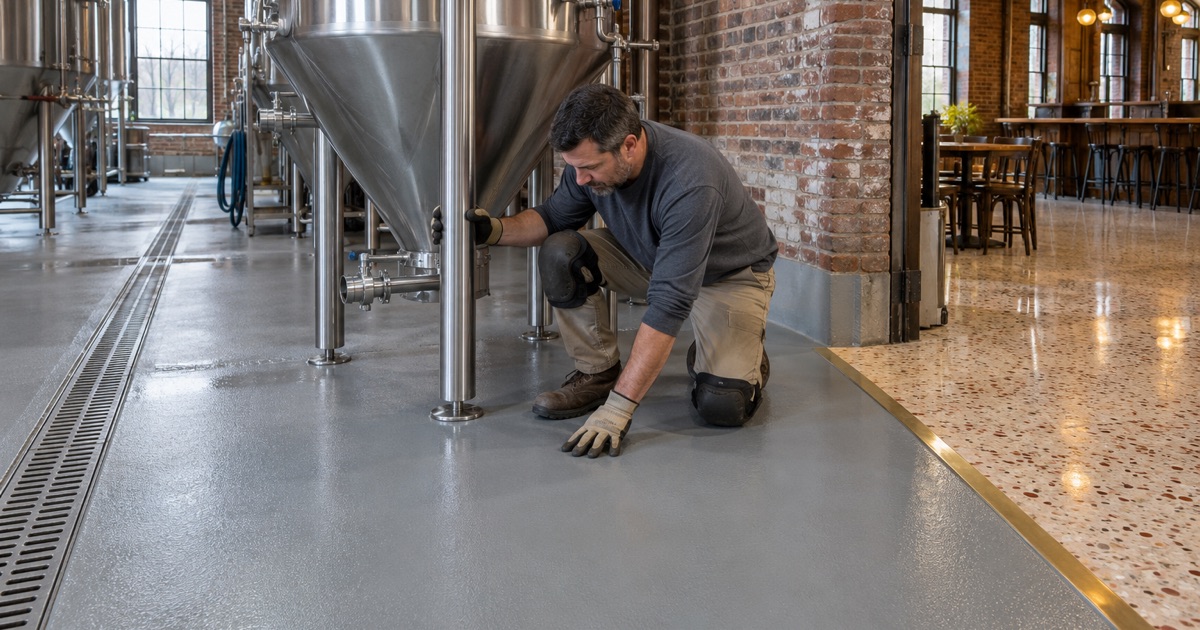
The brewhouse sits in the once-open, now-covered passage the trolleys ran through, with a 15-barrel system and six fermenters, according to the Journal Times. We have not seen that floor and do not know what is on it. What matters for this page is the pairing: a historic decorative floor and a working production slab, joined at a threshold, each with care rules that contradict the other’s.
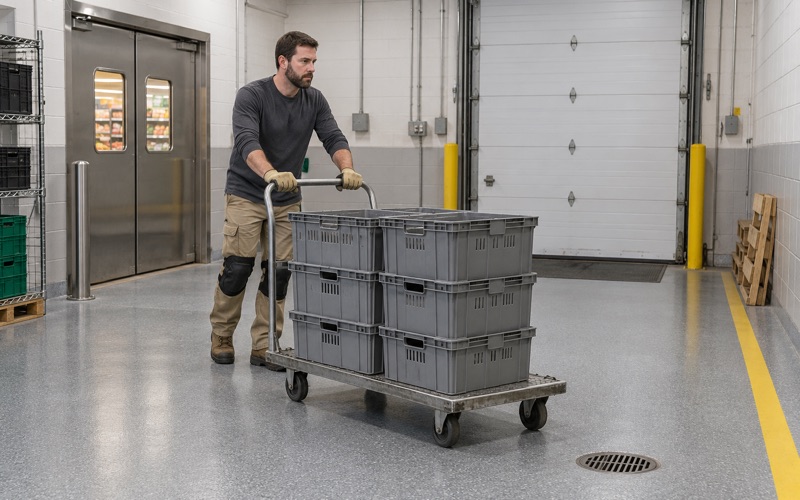
A brewhouse floor in general sees hot water, cleaning chemicals, spilled wort and the steady roll of kegs and carts. Those are the conditions a 100% solids epoxy system with a quartz aggregate broadcast is built to take. A taproom floor sees shoes, chair legs and spilled pints, and terrazzo has handled that kind of traffic for generations without any help from us.
Looking for epoxy-flooring closer to Cedarburg? See Epoxy-Flooring Services in Cedarburg.
What the Terrazzo Maintenance Guide Rules Out
The National Terrazzo & Mosaic Association publishes a Terrazzo Maintenance Guide, and we read it before planning any job that runs up to terrazzo. It asks owners to dust mop daily, clean up spills as quickly as possible, and scrub at least weekly with a white pad and clean water. It states that use of diamond impregnated pads is not recommended for that routine scrubbing.
Pads, sealers and products
On stripping, the guide cautions that aggressive black pads may unintentionally sand or grind the floor. It also notes that not all sealers are strippable, tells owners to apply only sealers recommended for terrazzo, and asks for maintenance products designed specifically for terrazzo. Joints are to be hand-cleaned with a neutral cleaner rather than scoured.
Read together, those lines describe a floor that is protected by restraint. The tools that open a concrete slab for us, a diamond grinder or a shot blaster, are exactly the kind of aggressive abrasion the guide warns against, and a resin primer is not a sealer recommended for terrazzo. Nothing in our kit belongs on that side of the threshold.
When the terrazzo needs more than cleaning
The guide allows scratches and stains to be removed with a fine-grit diamond pad, 100 grit, and otherwise directs owners to call an NTMA terrazzo contractor. That is where we point anyone who asks us about a worn or stained terrazzo floor. The guide does not speak against coatings on other floors, and we do not read it that way; it speaks to how terrazzo itself is kept.
For an owner, the practical point is that two contractors may be working on one property. We handle the concrete slab and the resin system on it, and a terrazzo contractor handles the terrazzo. Writing those scopes separately in the contract avoids the worst outcome on a building like this one, which is a historic floor sanded down by someone who meant well.
Where the Resin Floor Starts and Stops
In a building like the Pine Street terminal, the line between two floors is a real boundary, not a strip of trim. A resin system belongs on the brewhouse slab and stops at the terrazzo, and we plan that edge before we plan anything else about a job of this kind, from the primer to the topcoat to the order the rooms are worked in.
Finding and marking the edge
We start by locating the true transition, which may be a doorway, a metal divider strip, a change in elevation or a joint in the slab. That edge is taped and covered, and where it helps, a temporary board is laid over it so grinder guards, squeegees and rollers never ride onto the finished side.
The resin side is then ground right up to that line with small hand tools near the edge rather than the large machine. A clean termination detail, cut into the concrete where the system ends, gives the coating a locked edge so it does not lift, peel or creep toward the neighboring floor as the building moves and the floor is cleaned over the years.
Joints, drains and slab repair on the brewhouse side
Production slabs carry saw cuts and construction joints, and a brewhouse adds trench drains and equipment pads. Joints are filled with a semirigid joint filler before any coating goes over them, so cart and keg-dolly wheels do not break the edges. Cracks are read and repaired, and if a section of slab is too far gone, we say that before we price a coating.
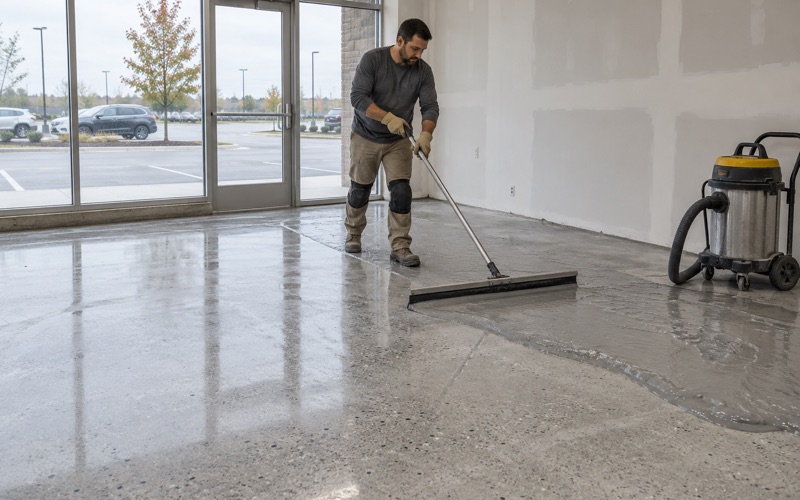
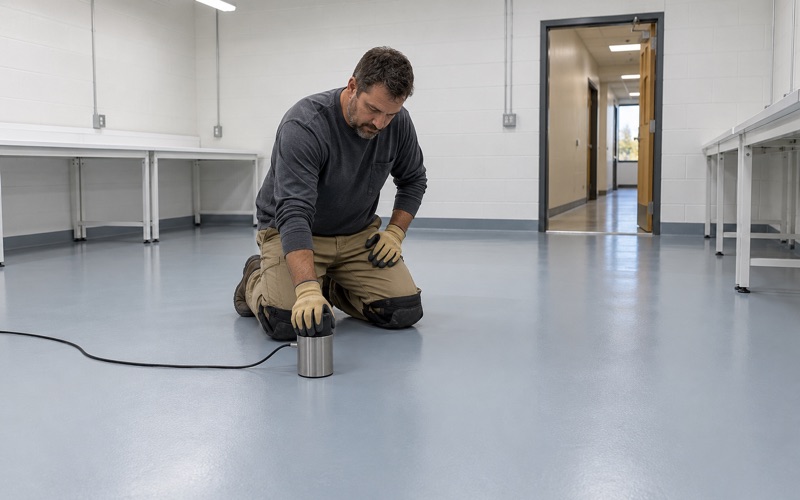
Moisture testing is done on a production slab regardless of how dry it looks. We use ASTM F2170 in-situ relative humidity probes or ASTM F1869 calcium chloride testing, and when the readings call for it, a moisture-mitigation primer goes down first. We never sell a floor coating as a fix for water coming up through a slab.
Matching the system to the room
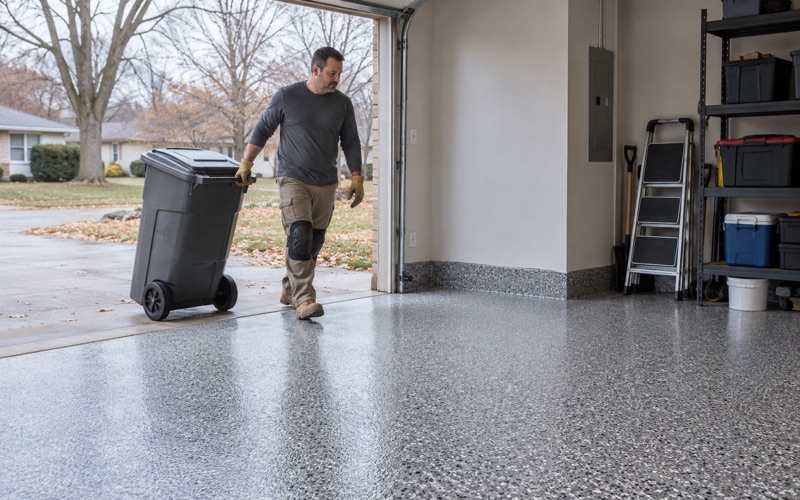
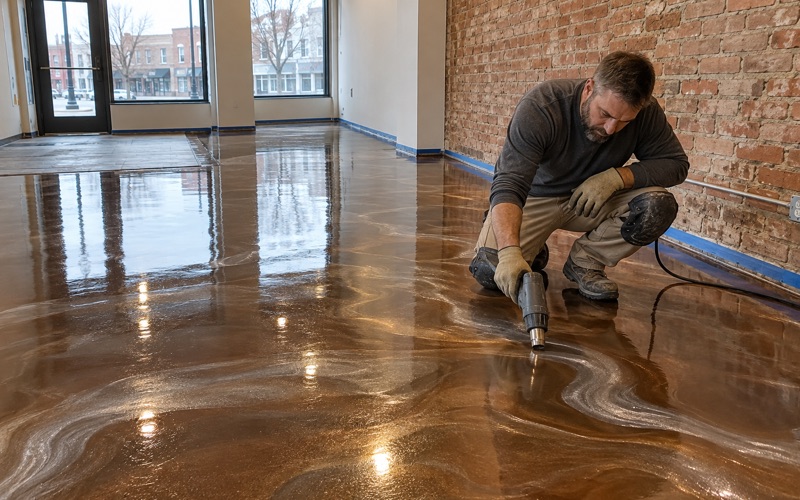
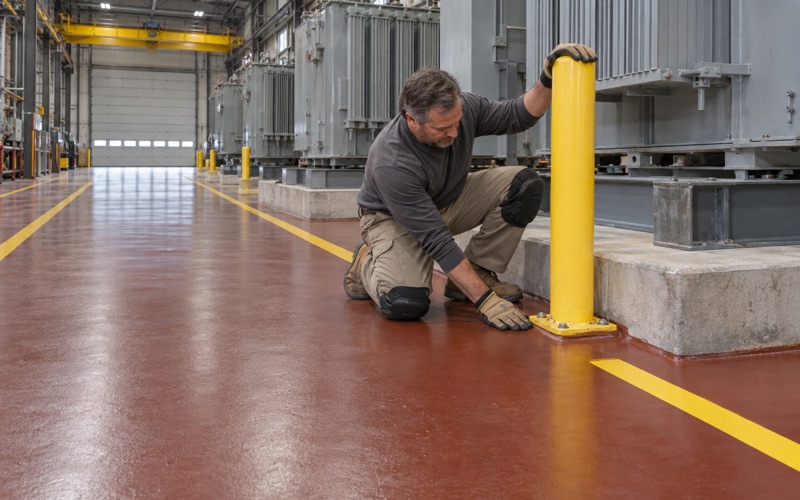
A working slab like a brewhouse floor calls for a heavier build than a garage. A typical choice is a 100% solids epoxy base with a quartz aggregate broadcast for traction, finished with a chemical-resistant topcoat, sometimes a polyaspartic or polyurea where the owner needs a faster return to service. Our proposal names the exact product, the build and the finished thickness.
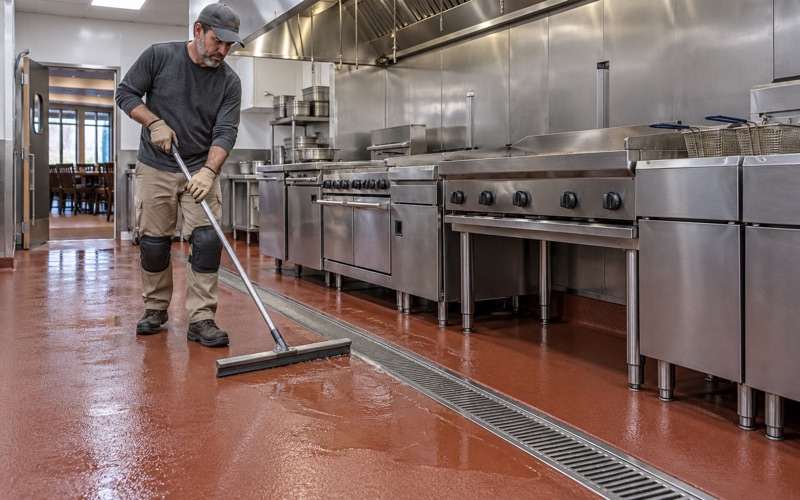
Texture is a decision, not an accident. More broadcast and a heavier topcoat give better footing on a wet floor but are harder to squeegee clean, so we set the profile with the people who will be mopping it. A smooth finish suits a dry storage room; a working floor that is hosed down every brew day usually wants more grip.
Keeping Grinding Dust and Wash-Down Off the Terrazzo
The edge is only half of the boundary. The other half is everything that moves through the air or across the floor while the resin side is prepared and coated, and on a job next to historic terrazzo, that is where most of our planning time goes.
Dust and slurry
Our grinders run with vacuum shrouds connected to dust collectors, and the dust and any slurry are collected on site. Nothing is washed into a floor drain or a storm sewer. Doorways to the finished side are sealed with plastic sheeting, and foot traffic between rooms is routed so nobody tracks abrasive grit across a polished floor.
Grit is the real risk. A few loose particles under a boot can scratch terrazzo much the way the guide’s aggressive pads would, so we clean the work zone with vacuums at the end of each session rather than sweeping, and we keep tools, buckets and mixing stations off the finished side entirely until the job is closed out.
Wash-down water and cleaning chemicals
A brewery washes its floors as part of brewing. After a resin system is in, the wash-down on the production side should run to its own drains and stop at the transition rather than sheeting onto the terrazzo. Where the slab’s slope allows, we detail the resin edge so water turns back toward those drains instead of crossing the threshold.
Cleaning chemicals are a separate question. The products that suit a resin floor are not necessarily terrazzo products, and the guide asks for maintenance products designed specifically for terrazzo. We advise owners to keep two cleaning routines, labeled by floor, so a strong cleaner meant for the brewhouse is never mopped across the taproom.
Scheduling and permits in Burlington
Work inside a business that has to stay open is scheduled around its hours, including overnight and weekend windows, and cure is timed against slab temperature and dew point rather than the calendar. Burlington spans Racine and Walworth counties, with most of the city in Racine County, and a permit question goes to the City of Burlington Building Inspection Department at 300 N. Pine St. before the job is booked.
Wisconsin licenses no floor-coating contractor; the state Dwelling Contractor credential attaches only to pulling a one- or two-family building permit. Every home job still gets a written contract before a deposit is taken, with the products and any warranty written into it, and a commercial job gets the same named-product proposal.
- 20+ Years Coating Concrete
- Moisture Testing in Every Scope
- Written Contract Before Any Deposit