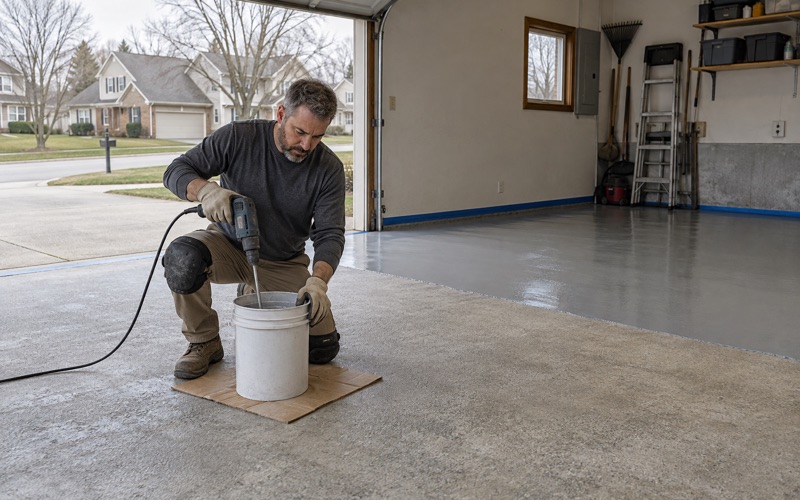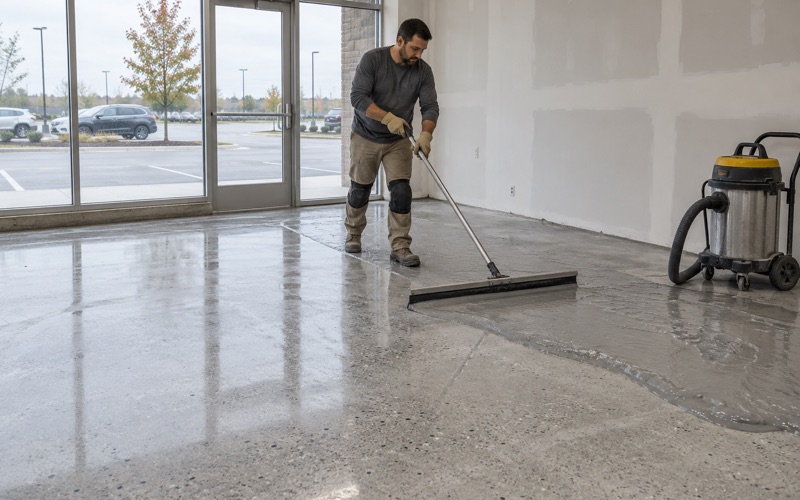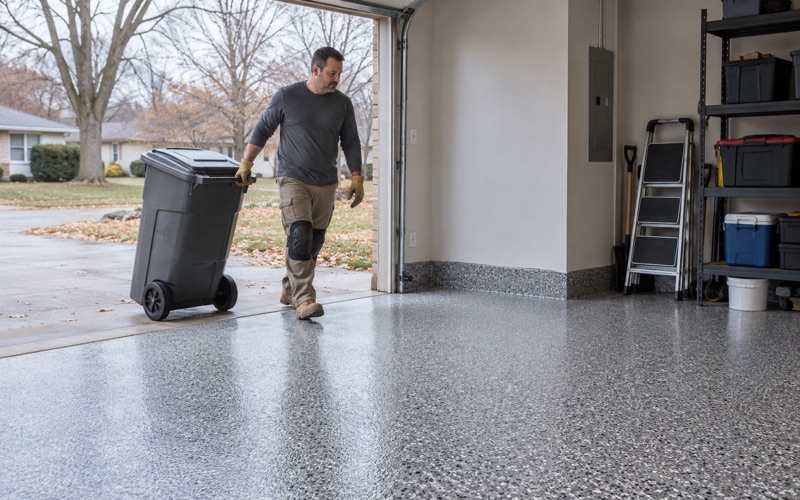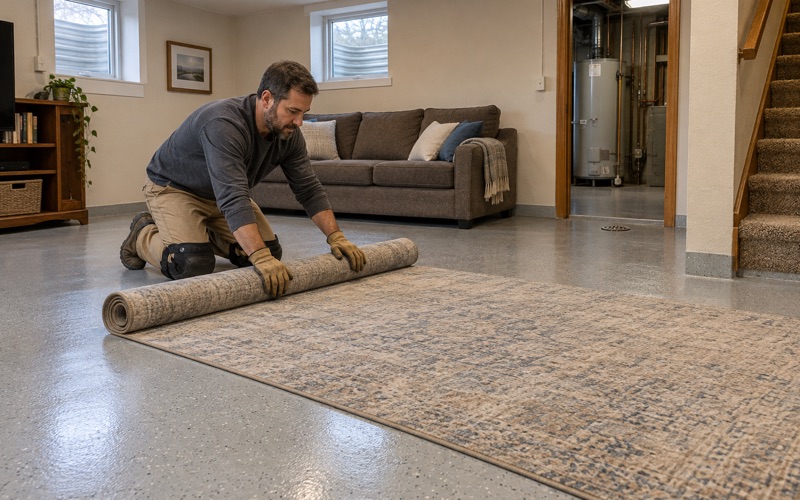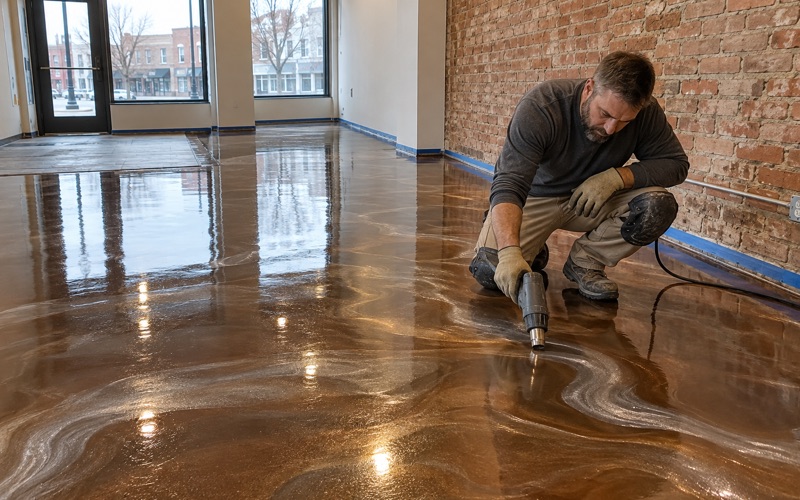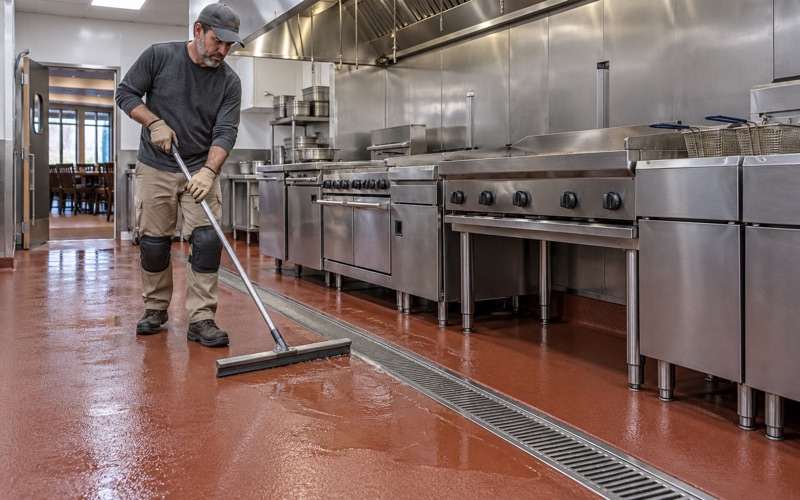
Waukesha Epoxy Flooring has spent more than 20 years on epoxy flooring in Cedarburg and the rest of our service area, and most of what we do here looks like it does anywhere else: garage slabs, basement floors, shop and storefront floors. The work changes when the building is old and the money behind the project is a rehabilitation credit, because then a floor is no longer only a floor.
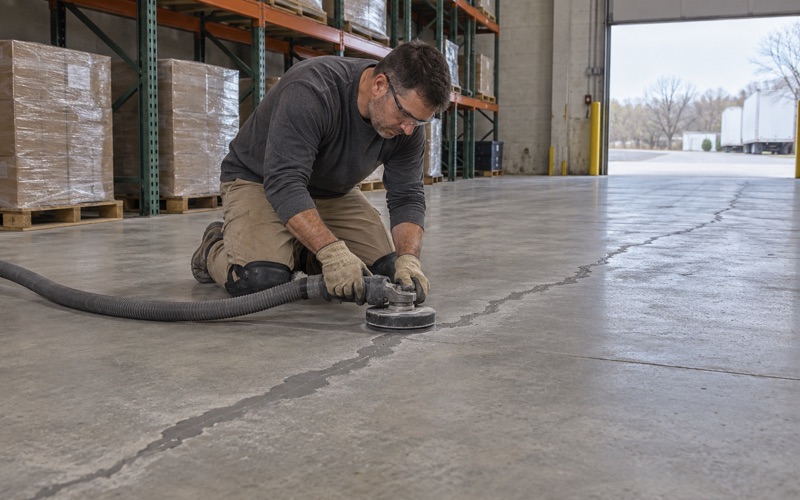
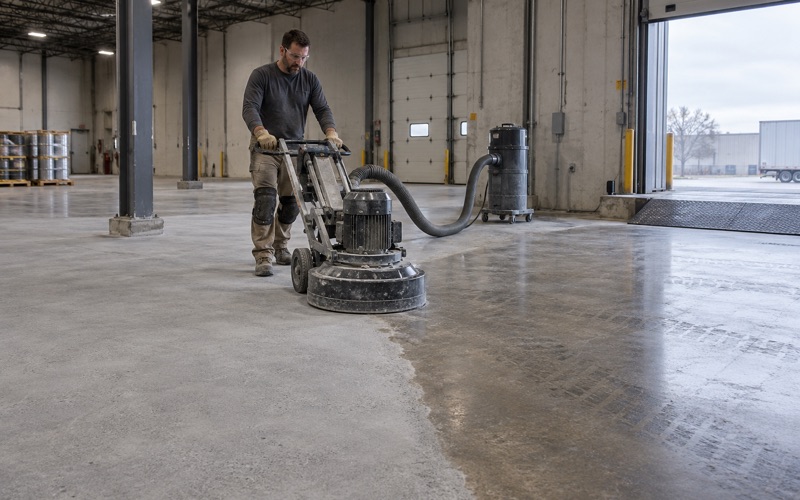
Our process starts the same way on every slab. We open the concrete mechanically with a diamond grinder or a shot blaster to a measured ICRI CSP profile, never with acid, and we put moisture testing into the written scope as its own line rather than offering it after a coating has lifted. The proposal names the product, the system build and the finished thickness.
That paper trail matters more in a credit-funded building than anywhere else. When a reviewer asks what went on the floor, how thick it is and what was under it before, the answer should already exist in a document, not in somebody’s memory of the job.
Cedarburg’s National Register Downtown and the Cedar Creek Settlement
Cedarburg is a city in Ozaukee County, about 20 miles north of Milwaukee near Interstate 43, incorporated in 1885. Its downtown carries National Register status, and that status shapes how some building owners there approach any interior work, including the floor.
The Washington Avenue Historic District
The Washington Avenue Historic District is the core of that downtown, and the City lists it alongside the Columbia Historic District and a small part of the Hamilton Historic District on its historic properties and preservation page. A building in one of those districts is not automatically bound by federal rehabilitation rules. The rules attach when an owner chooses to pursue a certified tax credit.
The same City page points owners toward the federal credit run through the National Park Service and the state credit administered with the Wisconsin Historical Society. It also links a City Facade Improvement Program and an Economic Development Loan Program, which tells you the City expects owners to be weighing several funding sources at once.
The Hilgen and Wittenberg Woolen Mill
The best-known building in the district is the Hilgen and Wittenberg Woolen Mill, a limestone complex on the west bank of Cedar Creek. Its oldest stone buildings date to 1864-65, with a matching addition in 1873 and a third story added in 1907. It was listed on the National Register in December 1978.
The mill brought the first electricity to Cedarburg in 1897 and kept operating until 1969. It now houses the Cedar Creek Settlement, with shops, studios and a winery inside the old stone walls. We mention it as a place every Cedarburg reader knows, not as a client, and as the clearest local picture of what an old industrial floor in a reused building looks like.
Local Review and Where It Stops
The City has a Landmarks Commission, a Historic Preservation Overlay Zoning District and a B-3 Central Business District. We have not confirmed that local review reaches interior floor finishes, so we do not tell owners it does. Exterior and facade questions go to the City; interior finish questions in a credit project go through the state and federal review described below.
Looking for epoxy-flooring closer to Grafton? See Grafton Epoxy-Flooring.
How the Historic Tax Credit Reviews a Whole Project
The federal historic tax credit is not granted line by line. An owner cannot claim the masonry repair, leave the floor out of the application and treat the floor as a private matter. The certification looks at the rehabilitation as one project.
The Rule in 36 CFR 67.6(b)(1)
The regulation states it plainly: “All elements of the rehabilitation project must meet the Secretary’s ten Standards for Rehabilitation.” It goes on to say that “portions of the rehabilitation project not in conformance with the Standards may not be exempted.” A floor coating installed during a credit project is one of those elements whether or not its cost is claimed.
In practice that means the Secretary’s Standards for Rehabilitation reach a finish decision a contractor might otherwise treat as routine. Grinding off an old floor, covering it, or replacing it are all changes a reviewer can weigh against the Standards, and a nonconforming piece can put the certification of the entire project at risk.
Floors Are Interior Finishes the Standards Cover
National Park Service interior guidance lists historic floors among the character-defining features to retain and repair. Published appeal decisions show how that plays out. In a 2023 rowhouse decision, removing wood flooring, mantels, doors and trim was found to violate Standards 2 and 5.
In a 2019 decision on the Hamilton Building, hazardous-materials abatement was not accepted as a reason to remove floor materials. In a 2020 decision on the Macaulay Davis Building, reviewers asked where historic finishes had been retained, removed or newly added, and the project was found noncompliant with Standards 2, 3, 5 and 6.
None of those decisions bans a resin floor, and no rule we know of does. The Park Service judges each treatment in its own building. What the decisions do show is that the floor is on the reviewer’s list, and that the question will be asked whether or not the owner planned for it.
The State Credit Runs Alongside
Wisconsin offers its own historic preservation credit, a state income tax credit of 20 percent of qualified rehabilitated expenditures for eligible income-producing buildings. Owners often pair it with the federal credit, which is why the floor decision tends to sit inside a larger financing plan rather than a standalone flooring budget.
Coating Over, Beside or Instead of an Original Floor
When a credit-funded owner calls us, the first question is not which color of flake they want. It is which of three relationships the new floor will have with the old one, because each carries a different weight under the Standards and a different conversation with the reviewers.
Over the Original Floor
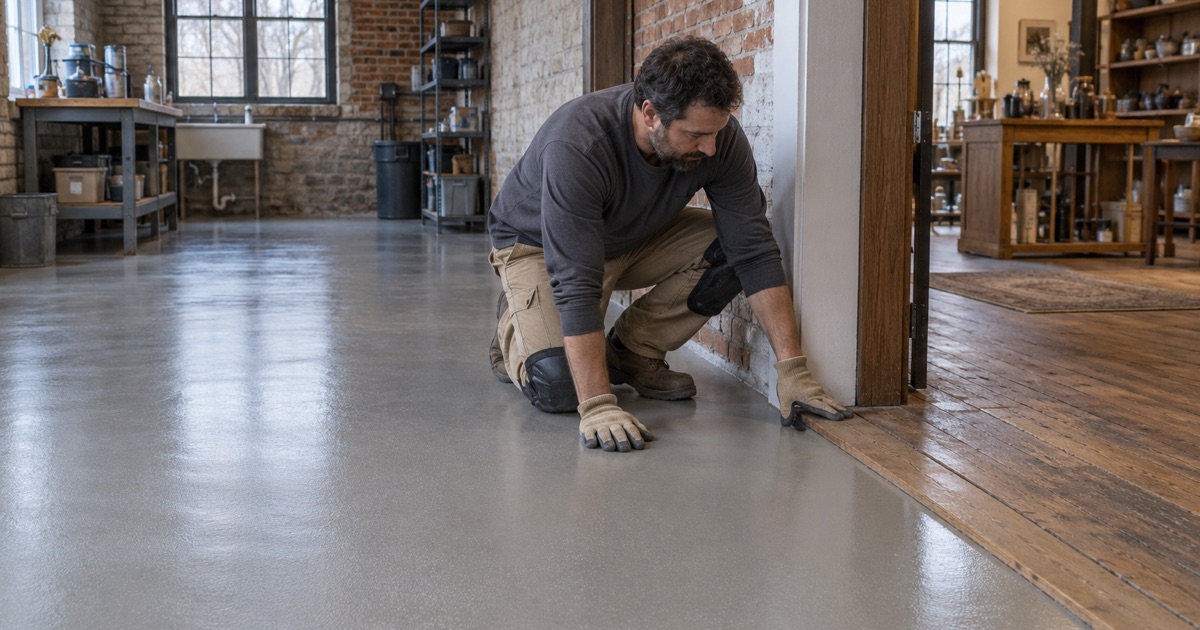
A coating applied directly over a historic concrete or stone floor changes its appearance and, depending on the system, may not come off cleanly later. Our standard preparation is mechanical: diamond grinding or shot blasting removes the top of the surface to build profile. On an original floor, that removal is itself the change a reviewer will want described before it happens.
That is why we write the surface profile, the product and the finished thickness into the proposal. A 100% solids epoxy body coat under a polyaspartic topcoat is a very different thing from a penetrating lithium silicate densifier, and the submittal should say which one is going down and why.
Beside the Original Floor
Some projects keep the historic floor where it survives and put a resin system only in spaces that were never finished, were already lost, or now serve a new function such as a kitchen or a restroom. The proposal then needs to show where one floor stops and the other begins, so the retained area is visible on paper.
We read the cracks, joints and old coatings in every area before quoting. When a slab in a new-use space needs repair or replacement before anything can be coated, we say so plainly, and the owner can carry that answer into the same review instead of discovering it during installation.
Instead of the Original Floor
Replacing a historic floor outright is the option the appeal decisions above treat most harshly. If an owner believes a floor cannot be saved, that case belongs in front of the reviewers with documentation of its condition, not in a demolition schedule. We do not quote a tear-out in a credit building as if it were a routine slab replacement.
Working With the State Historic Preservation Office Before the Floor
The federal credit is certified by the National Park Service with the Wisconsin State Historic Preservation Office as the first point of review. Interior finishes, floors included, are best settled there before installation. A finish decided after the fact is a finish the owner may have to defend or undo.
What We Put in Writing for the Submittal
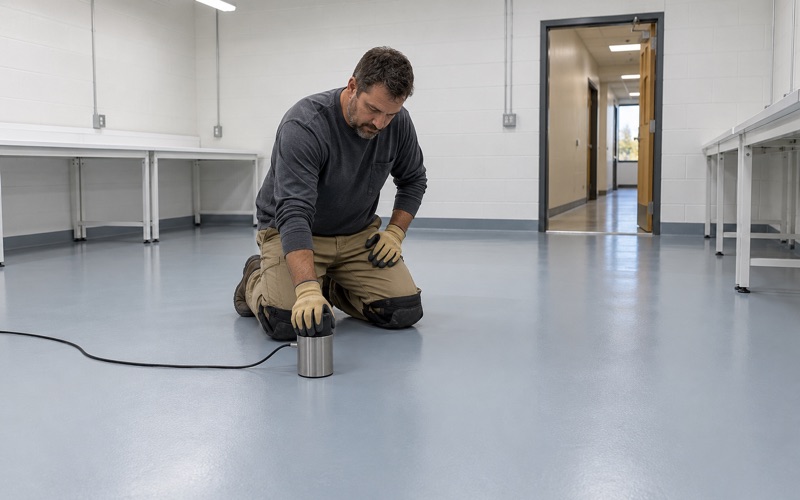
For a credit project we provide a scope the owner and their consultant can attach: the product by name, the system build layer by layer, the finished thickness, the preparation method and the areas covered. Moisture results go in as well, from ASTM F2170 in-situ relative humidity probes or ASTM F1869 calcium chloride testing, depending on the slab.
Warranty exclusions are read to the owner before anything is signed, with moisture from below named first. We also say plainly that a floor coating is not radon reduction and does not fix water coming up through a slab, which keeps those claims out of a document reviewers will read closely.
Scheduling Around a Building That Stays Open
Downtown buildings with shops, studios or a tasting room often cannot close for a week. We schedule grinding, coating and cure around the hours a space has to stay running, including overnight and weekend windows, and we collect grinding dust and slurry on site rather than washing it into a floor drain or a storm sewer.
Ozaukee County sits whole-county inside the Milwaukee 2015 ozone nonattainment area, so we select products with their volatile content in mind on every job here. Curing is set against slab temperature and the dew point spread at the surface, not against a calendar date someone picked for a grand opening.
Cedarburg Floors Outside a Credit Project
Most Cedarburg floors never touch a credit application. Detached single-family houses account for about 62.5 percent of the city’s housing units, and roughly 94 percent of owner-occupied units are detached homes. For a garage or basement in one of them, the Standards do not apply and the job is the familiar one.
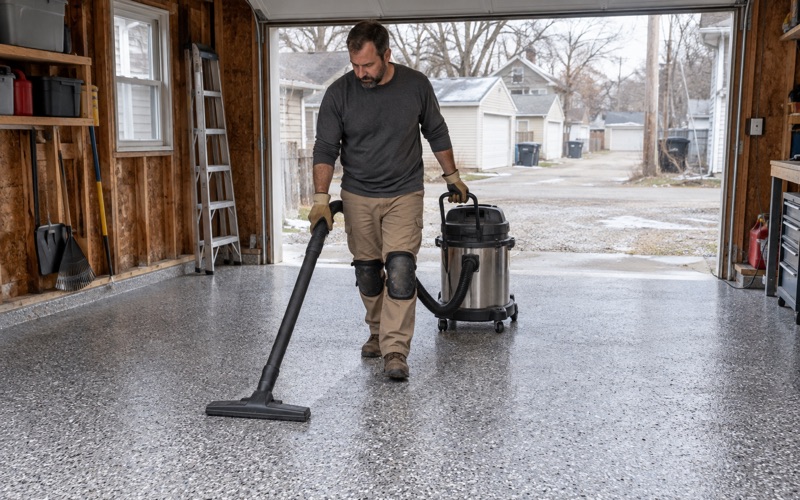
We still test before we coat, because Wisconsin does not require a vapor retarder under an unconditioned attached garage slab, and a dry-looking floor is not proof of a dry one. Garage systems are built for the salt and calcium chloride brine winter tracks in, and every home job gets a written contract before any deposit is taken.
- 20+ Years Coating Concrete
- Moisture Testing in Every Scope
- Written Contract Before Any Deposit