Waukesha Epoxy Flooring has spent more than 20 years on epoxy flooring in Elkhorn and across southeastern Wisconsin, and the floors we think hardest about here are the ones that take farm work back indoors. A veterinary practice that sends trucks out to barns and leads horses into its exam rooms needs a floor that washes down hard, every day, without losing its grip or its edges.
That is a different job from a garage or a basement. Manure, wet bedding and field mud carry grit that scours a thin coating, and a wash-down routine puts water, disinfectant and scrubbing on the same surface again and again. The coating system has to be built thick enough to survive that, and the slab under it has to be prepared so the bond holds.
This page walks through how we approach those floors: what the state veterinary rule actually asks of a facility, where the heaviest wear lands in a mixed practice, and how we build and schedule a surface that a clinic can clean every day without chipping it apart.
A Mixed Practice on O’Connor Drive and the Rule Behind Its Floors
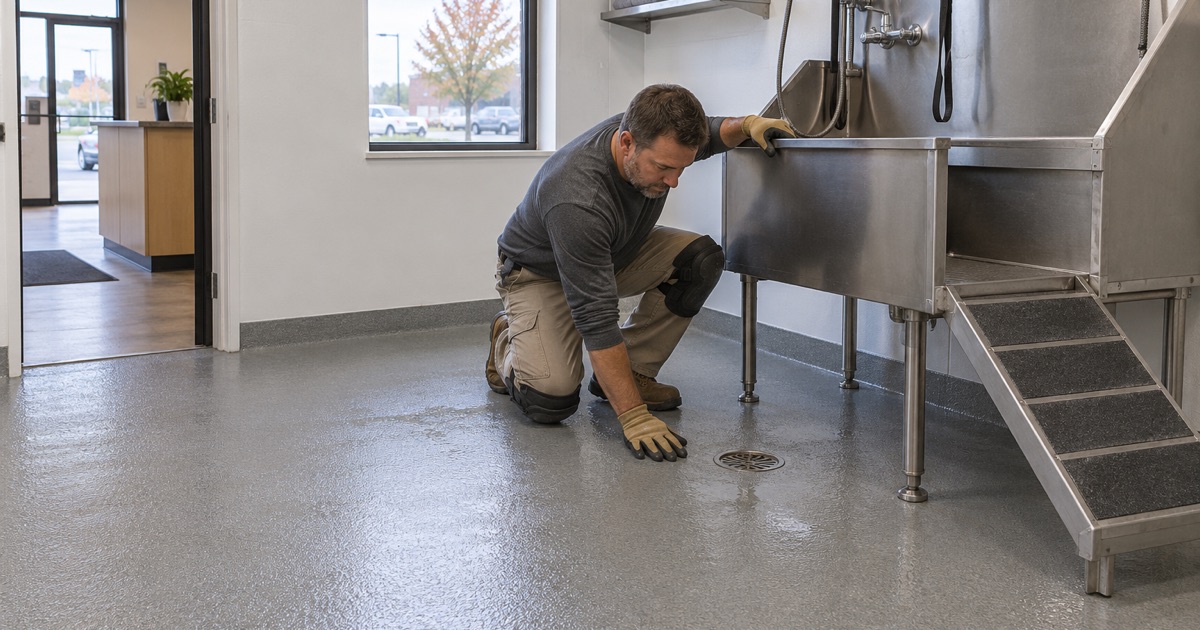
Elkhorn is the Walworth County seat, about 40 miles southwest of Milwaukee, and it is still a town where a veterinary practice treats cattle and goats as routinely as cats. Elkhorn Veterinary Clinic at 205 East O’Connor Drive is a clear example. It sees dogs and cats alongside horses, bovine patients and small ruminants, and it keeps a veterinarian on call after hours and on holidays for horses and other large animals.
The clinic lists six fully stocked ambulatory vehicles on hand for farm and home visits, and it performs equine surgery in-house, including laser, soft tissue and orthopedic work. We have not seen inside the building and are not describing its layout. We use it because it shows plainly what a mixed practice in this part of the county asks of its floors.
What VE 1.58 Says About Facilities and Mobile Units
Wisconsin’s Veterinary Examining Board lists unprofessional conduct in Wisconsin Administrative Code VE 1.58. Subsection (21) makes it unprofessional to fail to keep the veterinary facility and all equipment, including mobile units, in a clean and sanitary condition. Subsection (22) covers failing to let the board or its agents enter and inspect practice facilities, vehicles, equipment and records during office and other reasonable hours.
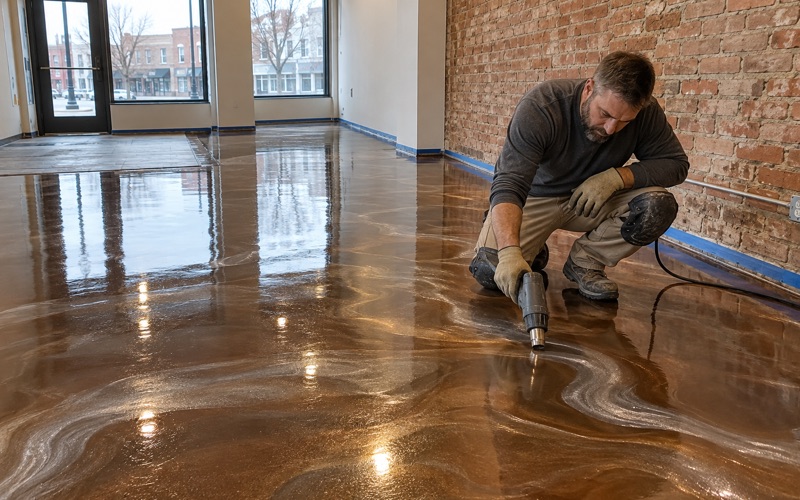
The rule sets a standard, clean and sanitary, and it does not name a floor material. The board approves no particular coating, and we do not sell one as if it did. What a coating can do is make that standard easier to meet: a seamless surface with no open pores, no cracked joints holding residue, and no worn patches where bare concrete soaks up whatever was tracked in.
The words “including mobile units” matter for the floor plan as much as for the trucks. A vehicle that has to be kept clean gets cleaned somewhere, and wherever that happens indoors becomes one of the hardest-working floors in the building.
Where the Wear Concentrates
In a small-animal clinic the heavy traffic runs between the lobby and the exam rooms. In a mixed practice there are two more paths: the route a truck’s gear takes when it comes back from a farm call, and the route a horse takes from the trailer to an exam or surgery room. Those are the floors we look at first when a practice like this asks for a quote.
The small-animal side still matters, but its floors take a lighter, steadier kind of wear. Splitting the building this way lets a practice put the heavier, more textured system where hooves and farm gear actually travel, and a smoother, easier-to-mop finish in the rooms that only ever see paws, carriers and staff shoes.
Looking for epoxy-flooring closer to Pewaukee? See Epoxy-Flooring in Pewaukee.
Where the Farm Calls Come Back In
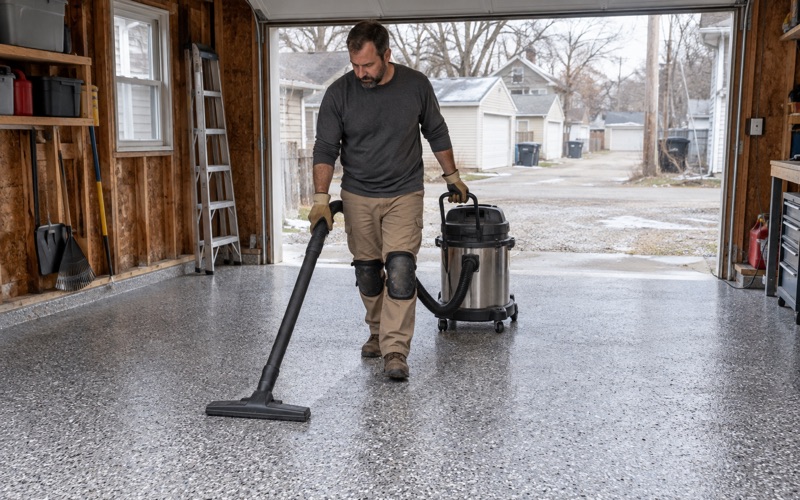
An ambulatory vehicle returns carrying what the day put on it. Boots, tubs, buckets and equipment come off carrying manure and mud, and the truck is restocked with supplies before the next call. If that cleaning and restocking happens in a bay, a garage or a back room, the floor there sees grit, standing water, disinfectant and dragged cases in a single afternoon.
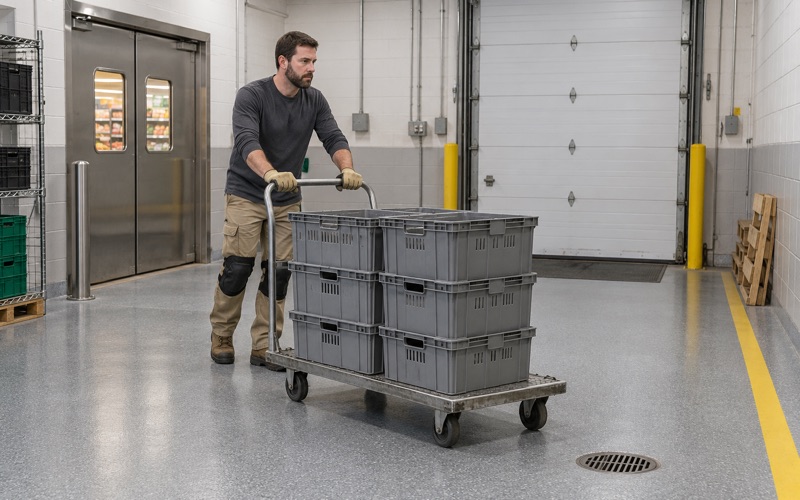
Restocking also puts weight in the same places day after day. Shelving units, supply cases and carts stand on the same spots and roll the same short routes, and a thin coating dents and scuffs along those lines first. A heavier build spreads that load and keeps the worn paths from becoming the spots where cleaning stops working.
A Floor Built for Wash-Down and Dragged Weight
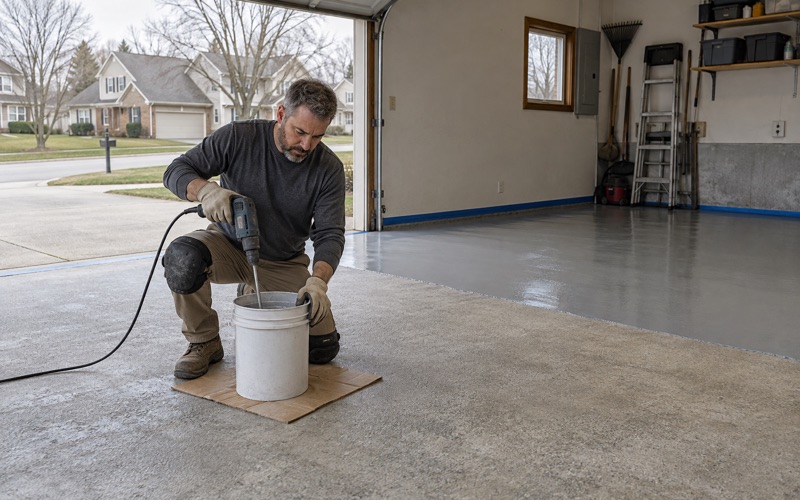
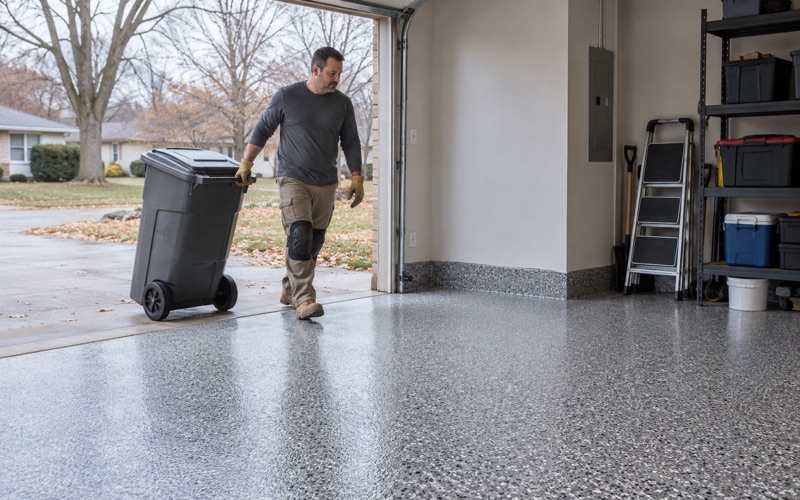
For that kind of space we generally build a 100% solids epoxy base with a quartz aggregate broadcast, locked in by a topcoat. The quartz gives the surface a texture that holds a wet boot and resists the scouring of grit underfoot. The proposal names the product, the system build and the finished thickness, so a practice manager can check the quote against what was actually installed.
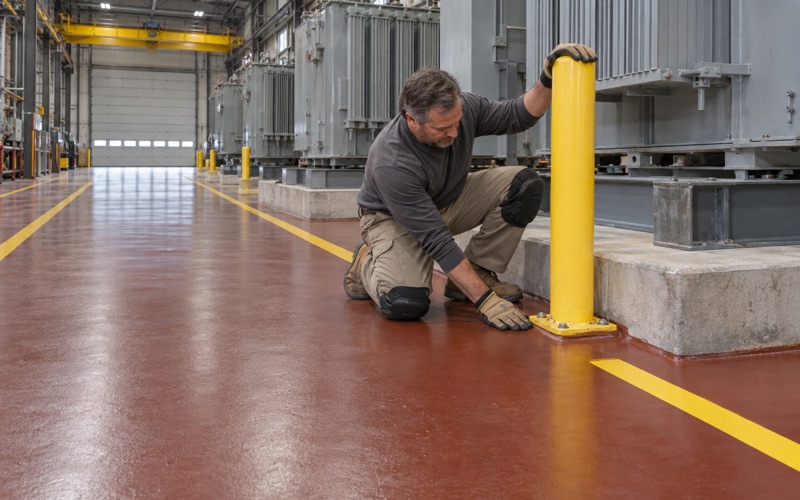
Where vehicles roll onto the floor, hot tire pickup becomes a concern, because a warm tire can lift a weak coating right off the slab. A polyaspartic or polyurea topcoat resists that better than many single-coat products, and it stands up well to the chemicals of routine cleaning. We match the topcoat to the cleaners a practice actually uses rather than guessing.
Joints, Cracks and the Dust Off the Grinder
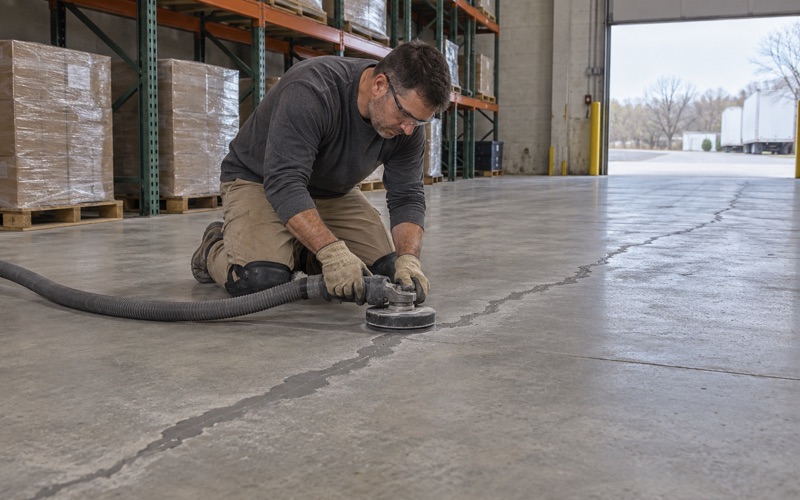
Saw-cut joints and cracks are where residue collects and where a coating fails first under wheeled carts and dropped equipment. We fill control joints with a semirigid joint filler before coating so the edges are supported, and we read every crack before quoting. When a slab needs repair or replacement before it can be coated, we say so instead of coating over the problem.
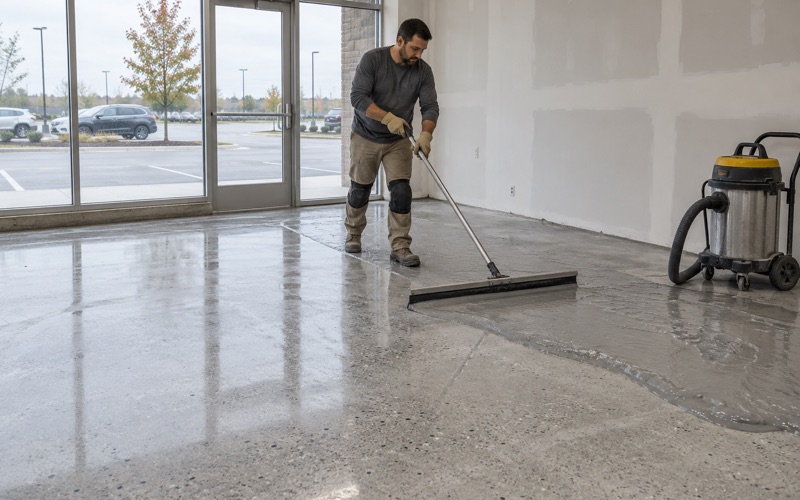
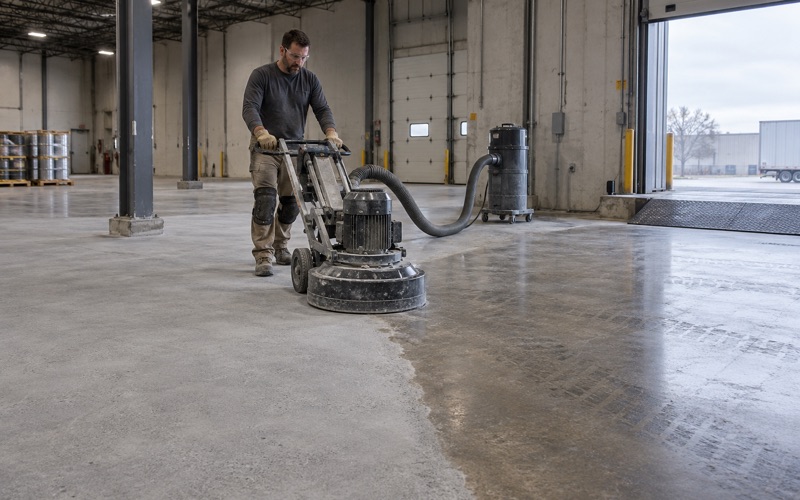
Every slab is opened with a diamond grinder or shot blaster to a measured ICRI CSP profile before any primer goes down, and we do not acid etch. Grinding dust and slurry are collected on site and never washed into a floor drain or a storm sewer, which matters in a building whose drains are part of its daily cleaning routine.
Horses Indoors: Exam and Surgery Floors
A horse led into an exam room puts a great deal of weight on a very small contact area, often through a steel shoe. That load arrives at a walk, then turns, steps back and sometimes skids sideways when the animal is nervous. A smooth, glossy coating that looks good in a showroom is the wrong surface for that room.
Grip Under a Shod Hoof
There is no measured traction rating for horses on any floor coating, and we will not claim one. What we can control is texture and build. A heavier quartz broadcast, a topcoat thin enough to leave that texture standing, and a build thick enough to take point loads without cracking give far better footing than bare sealed concrete or a smooth film.
Many equine facilities also lay rubber mats in standing areas, and a coating does not replace that decision. Where mats are used, the floor under and around them still has to be cleanable, because water and debris work their way under a mat. We talk through where mats will sit before choosing a system, so the textured areas and the cleaning plan line up.
Surgery Rooms and the Seams Around Them
An equine surgery suite has a different priority from an exam room. It has to be cleaned to a higher standard, and every seam is a place for contamination to hide. A seamless resin floor carried up the wall as a coved base removes the corner where floor meets wall, one of the hardest spots to scrub, and we plan cove height and transitions before the job is scheduled.
Laser, soft tissue and orthopedic procedures all bring their own cleaning demands, and we do not pretend to know a practice’s protocols better than its staff. We ask which disinfectants are used, how often, and whether anything stands on the floor for long periods, then choose a topcoat that holds up to that routine instead of a generic one.
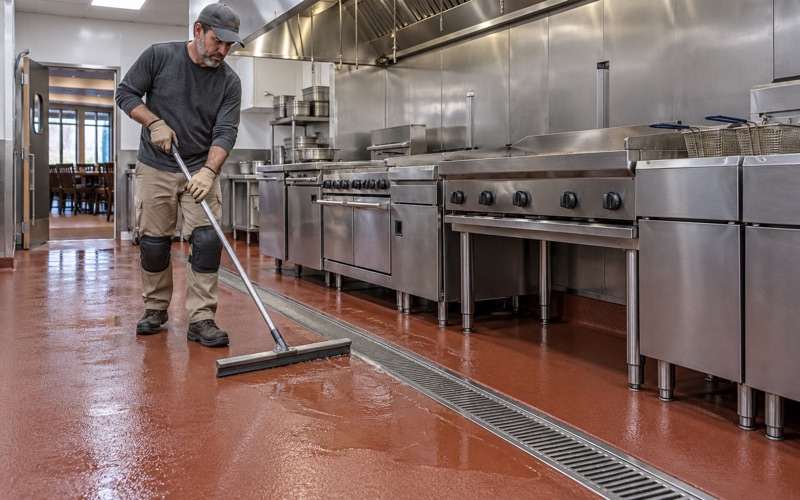
Washing Down Without Chipping
Chipping on a clinic floor almost always traces back to one of three things: a slab that was not opened properly, moisture coming up from below, or a coating too thin for the impact it takes. Preparation answers the first. Testing answers the second, and the build written into the proposal answers the third.
Moisture Testing Before the Quote Is Final
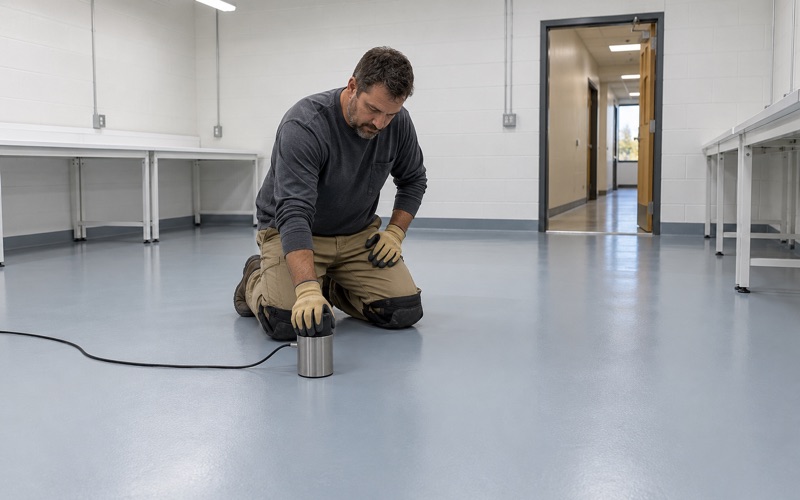
Moisture testing is a line item in our scope, not an extra sold after a floor fails. Depending on the slab we use ASTM F2170 in-situ relative humidity probes, ASTM F1869 calcium chloride tests or the simpler ASTM D4263 plastic sheet test, and when the readings call for it we specify a moisture-mitigation primer. A wet slab under a wash-down floor will push a coating off from beneath.
Warranty exclusions are read out before the job is sold, and moisture from below is the first one we name. We also do not sell a coating as a fix for water coming up through a slab. If the testing says the slab has a problem a coating cannot solve, the practice hears that before any deposit changes hands.
Curing, Scheduling and Permits Around a Working Practice
A clinic with farm calls going out early and after-hours large-animal coverage cannot simply close for a week. We schedule around the hours the building has to keep running, including overnight and weekend windows, and we phase the work room by room where that keeps a practice open. Curing is timed against slab temperature and the dew point spread at the surface, not the calendar.
Building inspection in Elkhorn is handled by a contracted building inspector, and a commercial building falls under the state commercial building code rather than the Wisconsin Uniform Dwelling Code. Coating an existing floor and replacing a slab are different questions, so we ask the city’s inspector whether a job needs a permit before it goes on the schedule.
Wisconsin does not license floor coating contractors, so there is no state credential to look up for this work. The things worth checking are on paper: a written scope that names the moisture test, the preparation method, the product and the finished thickness, and a warranty whose exclusions were explained before the work began.
- 20+ Years Coating Concrete
- Moisture Testing in Every Scope
- Written Contract Before Any Deposit