Waukesha Epoxy Flooring installs flake epoxy floor systems in Waukesha, WI, serving surrounding cities including Pewaukee, New Berlin, Brookfield, Hartland and Delafield. A flake floor, sometimes called a chip or broadcast floor, is the most popular system we put into local garages, and for good reason: it hides road salt residue and sand between washes, adds texture underfoot, and builds a thick, durable surface over the concrete. After more than 20 years of installing them, we also know that the look of a flake floor comes last and the slab work underneath decides how long it lasts.
Every flake floor starts with diamond grinding or shot blasting, never acid etching, so the base coat bonds to open, sound concrete. Moisture testing is written into the scope, cracks and spalls are repaired before anything is mixed, and the proposal names the base coat, the flake blend, the broadcast rate and the topcoat, along with the finished thickness.
The result is a floor built for Waukesha winters rather than a showroom sample. Brine stays on top of the sealed surface, the texture keeps boots and tires from sliding on snowmelt, and the clear topcoat protects the colors from sunlight and abrasion.
How a Flake Floor Is Built
The Base Coat and the Broadcast
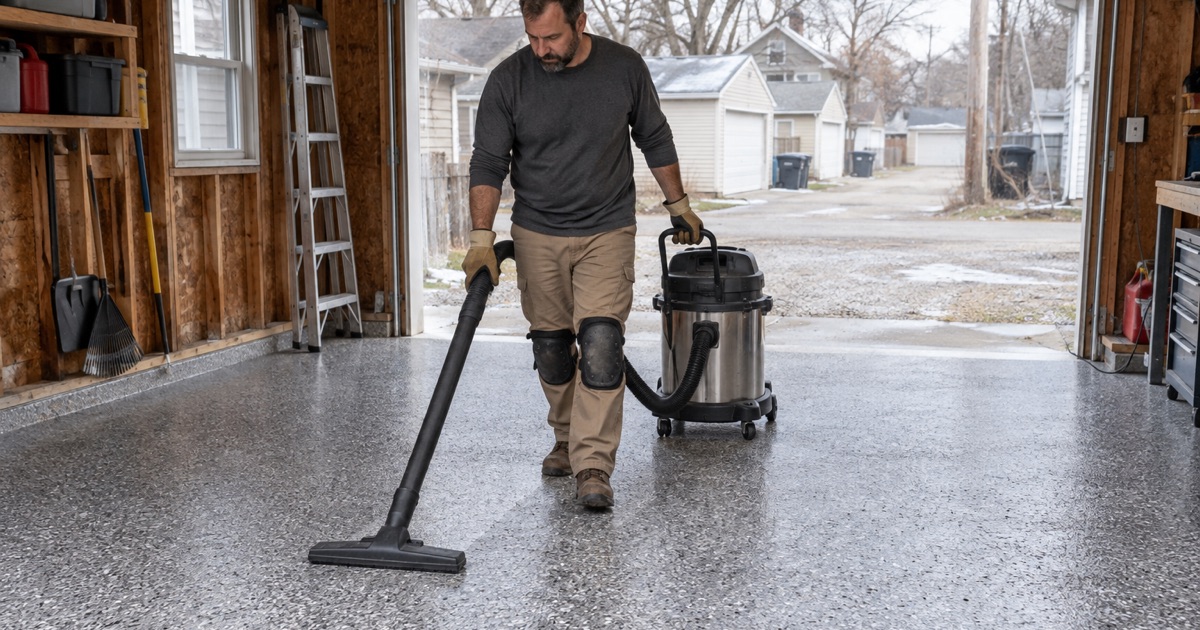
After grinding and repair, we roll out a pigmented base coat, usually a 100% solids epoxy chosen for its bond and build, tinted to complement the flake blend. While the base is still wet, vinyl flakes are thrown across the floor by hand in overlapping passes. On a full broadcast, we keep going until the surface will not accept any more chips, so no base color shows through.
Once the base has cured, the loose excess is scraped and vacuumed away. What remains is a textured layer of chips locked into the resin, ready to be sealed.
The Clear Topcoat
The clear topcoat seals the flakes, smooths the surface to the level of texture you want, and takes the wear from traffic, grit and cleaning. On most garages we use a polyaspartic or polyurea topcoat because it stays clear in sunlight, resists abrasion and hot tire pickup, and cures quickly. One coat leaves more texture; two coats give a smoother, glossier floor that is easier to mop.
Full Broadcast Versus a Light Scatter
Some low-cost floors scatter a few chips over a painted base for decoration. A full broadcast is a different system: it adds real thickness, gives the topcoat a uniform surface to bond to, and hides wear far better. We list the broadcast rate in the proposal so you can see which one you are being quoted.
Choosing Blend, Chip Size and Texture
Color Blends That Hide Dirt
Flake blends mix several colors of chip, and the mix has a big effect on how the floor looks day to day. Gray, tan and black blends with a few accent colors are popular in garages because they disguise salt film, sand and tire marks between washes. Lighter blends brighten a basement or workshop but show dirt sooner.
We bring sample boards so you can see the blends against your walls and lighting. A chip that looks bold on a small card can read very differently across a full two-car floor.
Chip Size and Surface Feel
Small chips create a fine, speckled look like granite and a slightly smoother surface. Medium and large chips look bolder and leave more texture under the topcoat. The texture matters in a Waukesha garage, where snowmelt pools at the door and along the tire paths for months, so we choose chip size with grip in mind as well as looks.
Flake Versus Quartz Broadcast
Quartz aggregate can be broadcast in the same way as flakes and makes an even harder, more slip-resistant floor, which is why it is common in commercial kitchens and locker rooms. Flake floors are usually the better fit for homes and light shops, where a softer look and easier cleaning matter more. We explain the tradeoff and price both when either could work.
Built for Garages, Basements and Shops
Garage Floors and Road Salt
Rock salt and calcium chloride brine eat into bare concrete through the freeze-thaw cycle, which is why so many local garage floors are flaking at the door. A flake floor seals the slab under a thick, chemical-resistant layer, so the brine sits on top and can be rinsed off. The texture of a full broadcast also gives better footing than a smooth coat when the floor is wet.
We schedule curing by slab temperature and dew point, not the calendar. A heated garage can be done any time of year; an unheated one in the middle of winter often has to wait for spring, and we say so before booking the job.
Basements, Workshops and Laundry Rooms
In a basement, a flake floor hides wear, cleans easily and works with area rugs and workbenches alike. Moisture testing comes first on any below-grade slab, and a moisture-mitigation primer goes under the system where the readings call for one, since a flake floor fails like any other coating when water pushes up from below.
Warranty and the Written Contract
Nearly every flake floor warranty excludes failure caused by moisture coming up through the slab, along with impact damage and chemicals outside the rated list. We read those exclusions out before the job is sold, and the products, blend and warranty are written into the contract every homeowner receives before a deposit is taken. Grinding dust and debris are collected and hauled away, never washed into a floor drain or storm sewer.
- 20+ Years Coating Concrete
- Moisture Testing in Every Scope
- Written Contract Before Any Deposit