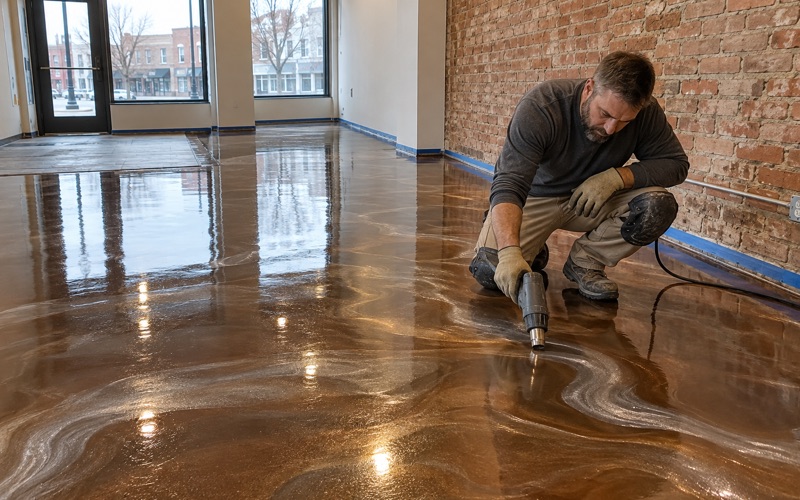
Waukesha Epoxy Flooring has more than 20 years behind its epoxy flooring in Menomonee Valley and the rest of the Milwaukee area, and one kind of slab gets more of our planning time than any other: the one with warm water running through it. When the concrete is also the heating system, the coating on top stops being a simple wear layer and becomes part of how the room is warmed.
That changes what we put in the proposal. It names the product, the system build and the finished thickness, so an owner or a mechanical contractor can check what the heating design is being asked to carry before anything is mixed. On a heated slab, that written thickness is not paperwork. It is a number the heating plan has to absorb.
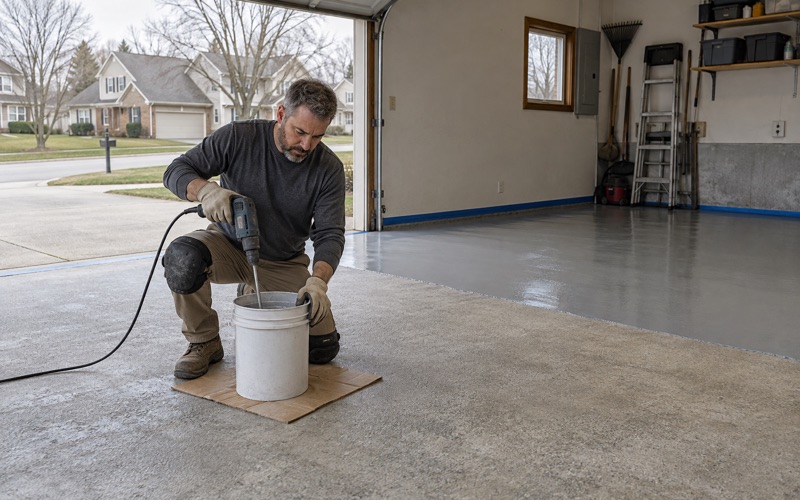
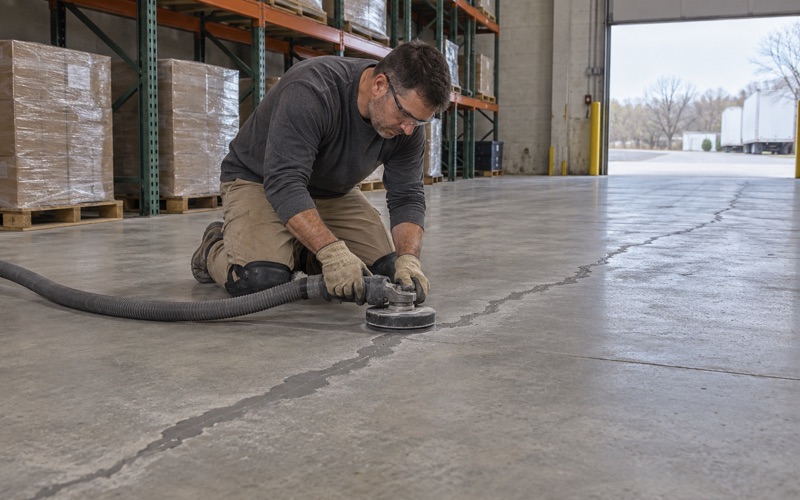
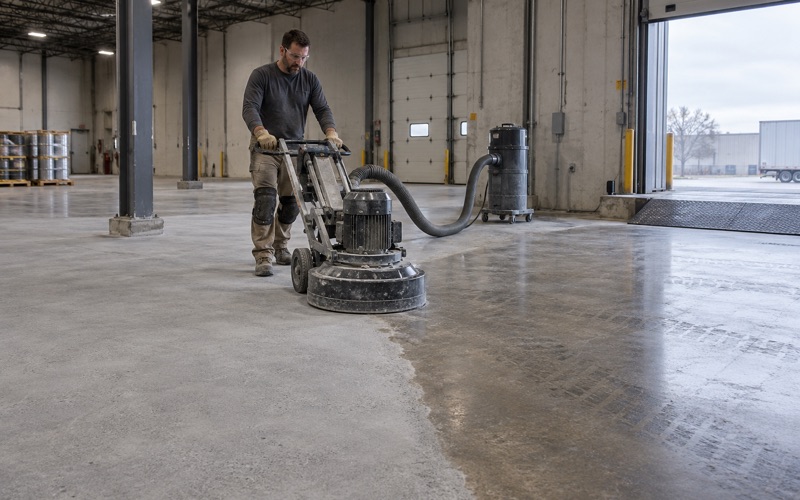
It also changes how we open the concrete. Every floor we coat is prepared mechanically, with a diamond grinder or a shot blaster, and we do not acid etch. Over embedded tubing, that mechanical prep has to be shallow and deliberate, and we say so in the scope rather than learning it with a grinder in hand.
A Nature Center Whose Floor Is the Heater
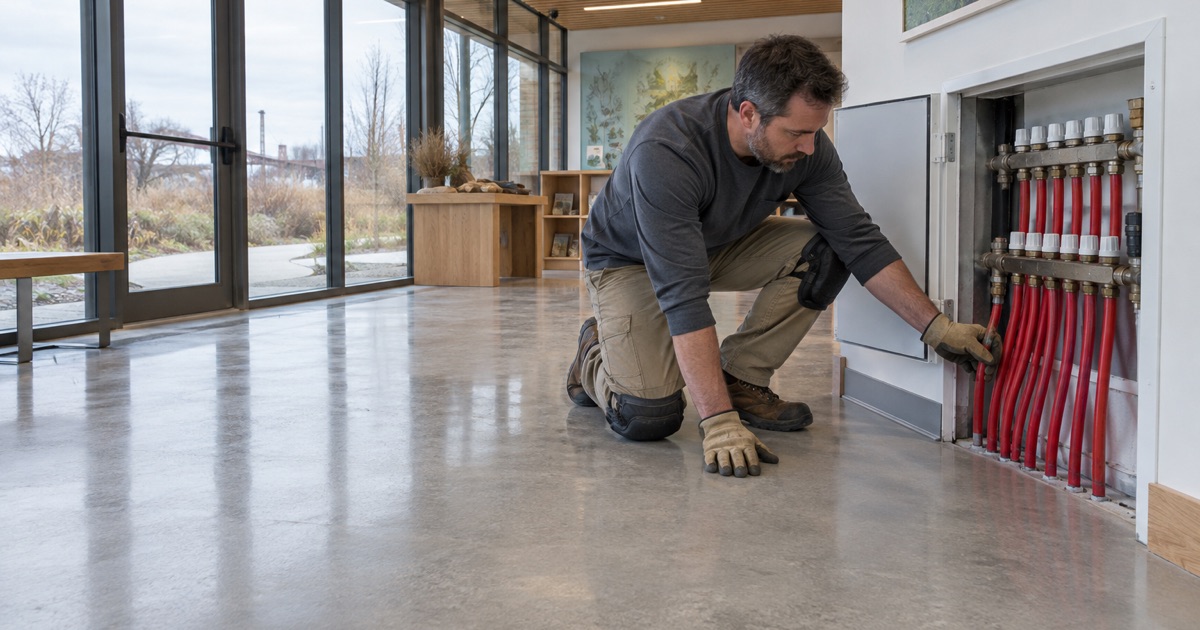
The clearest local example of a heated slab sits on public land rather than in any customer’s building, so we describe it as a reference point, not as a job of ours. It shows why a radiant floor has to be treated as a heat emitter first and a walking surface second.
The Urban Ecology Center on W. Pierce Street
The Urban Ecology Center’s Menomonee Valley branch stands at 3700 W. Pierce St., on the Valley’s south edge in the part of Milwaukee described as the Silver City neighborhood. It is a two-floor center of roughly 6,500 square feet, built on the lot of an old tavern. It opened in September 2012, less than a year after groundbreaking.
The branch is part of a broader effort to bring the Valley back after a long industrial history of stockyards, rendering plants and shipping. Its programs run mostly outdoors, in the 24-acre park next door on redeveloped brownfield. The building itself is the part that interests a flooring contractor.
Geothermal heat delivered through the floor
A venue listing for the branch describes the renovated tavern as outfitted with geothermal heating and cooling, radiant floor heating, solar hot water panels, a green roof and solar lighting. We have not read the Center’s own building documents, and we have not seen its floors. What the listing describes, though, is a common pairing.
Geothermal systems tend to deliver water at moderate temperatures, and a radiant slab is one of the natural places to use that water. The concrete stores the warmth and releases it slowly across the whole room. In that arrangement the floor surface is the emitter, and anything placed on top sits between the heat and the people standing on it.
Why that matters to a coating
A coating on an unheated slab only has to bond, wear and clean up well. A coating on a heated slab also has to tolerate steady warmth from below for years, and it has to stay thin enough that it does not slow the heat on its way to the room. Those two demands set the rest of this page.
Looking for epoxy-flooring closer to Richfield? See Epoxy-Flooring Services in Richfield.
The 85-Degree Guidance and the Resistance Budget
Radiant floors come with a temperature number attached, and it helps to be clear about where that number comes from. It is industry guidance, not a code, and we do not present it as a Milwaukee rule or a state requirement.
Where the 85-degree figure comes from
Flooring guidance quoted in the trade press says the surface of radiant-heated floors should not exceed 85 degrees F. Radiant heating guidelines summarize the same idea by area: about 85 degrees F where feet rest for long periods, and up to 90 degrees F in spaces people mostly pass through. Those are comfort and material limits the heating designer works within.
For a coating, the practical reading is simple. The finish will spend its working life at or near the surface temperature the system is designed to reach. We ask what that design temperature is before we choose a product, and if nobody can tell us, we plan for the guidance figure rather than guess low.
Maximum exposure temperature
Floor coverings are judged against a maximum exposure temperature, defined as the highest temperature a material can withstand just prior to a loss of physical properties. A finish that softens, yellows or loses its grip on the concrete under steady warmth has passed that point, even if it looked fine on the day it cured.
So on a heated slab we read the product data for its temperature rating, not just its wear and chemical resistance. A 100% solids epoxy base with a polyaspartic or polyurea topcoat is a common choice, but the right build is the one whose rated temperature sits comfortably above the slab’s design surface temperature.
Every layer adds resistance
A radiant system is designed around how easily heat passes from the tubing up into the room. Radiant guidelines hold that a floor covering’s resistance must not exceed the value the design assumed. Every layer added to the slab, whether resin, broadcast media or a topcoat, adds a little resistance the heating design has to carry.
This is one place a thin resin system has an edge over carpet or a thick floating floor. A seamless coating measured in mils adds far less resistance than a cushioned covering. Even so, a full quartz aggregate broadcast or a heavy urethane cement build adds more than a thin clear system, so we match the build to the design rather than to habit.
Matching the build to the heating plan
Where a heating contractor or the original design documents are available, we share the proposed system and its finished thickness before the job is sold. If the design is tight, a thinner build with a vinyl flake broadcast and a clear topcoat may be the honest answer, and we say so plainly instead of upselling a heavier floor the system was not sized for.
Grinding a Slab With Tubing in It
The biggest risk on a heated slab is not the coating at all. It is the grinder. Tubing cast into the concrete is easy to damage and expensive to reach, so surface preparation on these floors is planned around staying well above it.
We do not guess at tubing depth
Tubing depth varies from building to building and sometimes from one side of a room to the other, and no published figure tells us where it sits in a particular slab. We ask for the installation records, talk to whoever placed the system when that is possible, and treat any uncertainty as a reason to keep the prep shallower, not deeper.
We do not quote a safe grind depth as a number, because we cannot know one without knowing the slab. What we can promise is a method: the lightest mechanical prep that will still give the coating a sound bond.
A shallow profile is the target
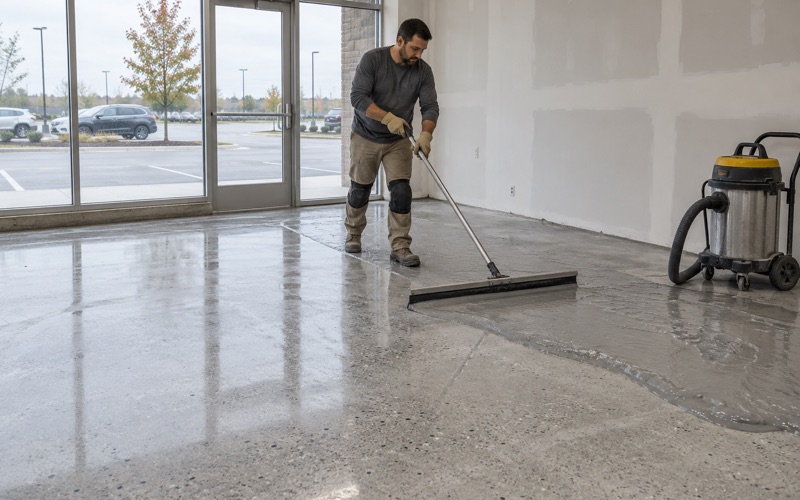
Epoxy and polyaspartic systems bond to an open, clean surface, and the ICRI CSP 1-10 scale describes how rough that surface should be. On a heated slab we aim for the low end of the profile the product allows, using fine diamond tooling and repeated light passes rather than one aggressive cut. Grinding dust is collected on site as we go.
Shot blasting can work on a heated slab too, but we set it gently and test it on a small area first. Where an old coating has to come off, we remove it in stages and stop as soon as clean concrete shows, rather than chasing a deeper profile than the new system needs.
Cracks, joints and moisture on a warm slab
A heated slab expands and contracts with every heating cycle, so we read its cracks and joints carefully before quoting. Some cracks are stable and can be filled. Others move with the heat, and we tell the owner plainly when a slab needs repair before a coating will hold over it.
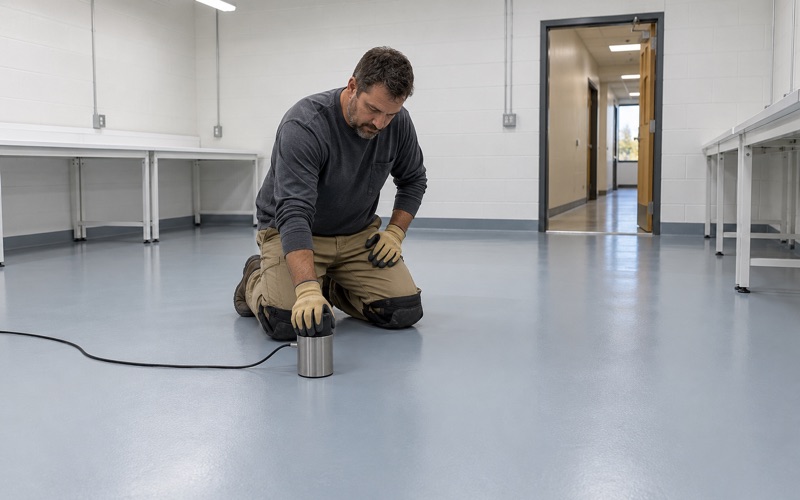
Warmth from below can also push moisture vapor up through the concrete faster than in a cold slab. Moisture testing is a line item in our scope, using ASTM F2170 in-situ relative humidity probes or ASTM F1869 calcium chloride testing, and we read warranty exclusions out before the job is sold, with moisture from below named first.
Radiant Slabs in Milwaukee Shops, Basements and Garages
Heated floors are not limited to a nature center. We see them in light industrial shops, finished basements and attached garages around Milwaukee, and the same rules apply in each: know the design temperature, keep the build appropriate, and keep the grinder shallow.
Shops and light industrial floors
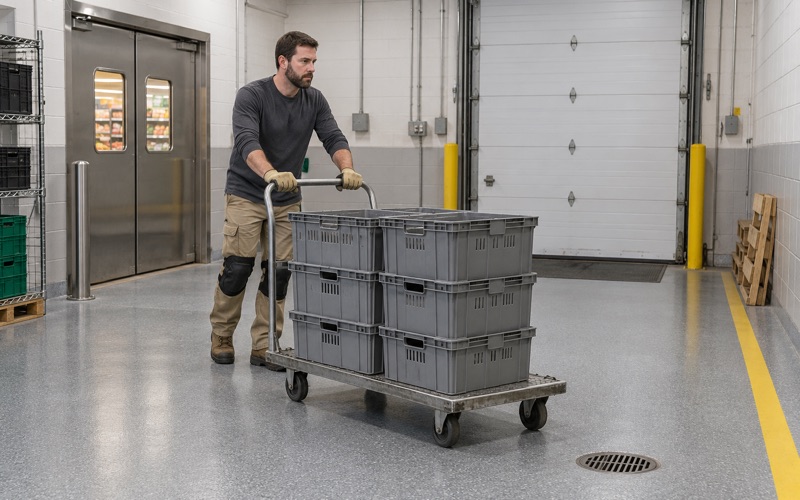
A heated shop floor still takes forklift and cart traffic. Control joints get a semirigid filler before any coating goes over them, so wheels do not chip the edges. We schedule the work around the hours the building has to keep running, including overnight and weekend windows, and we coordinate with whoever manages the heating so the slab is at a steady temperature during application.
Curing depends on slab temperature and the dew point spread at the surface, not on the calendar. A radiant system that can hold the slab steady is an advantage here, as long as it is not running hot enough to rush the cure or cause outgassing and pinholes in the fresh coat.
Finished basements
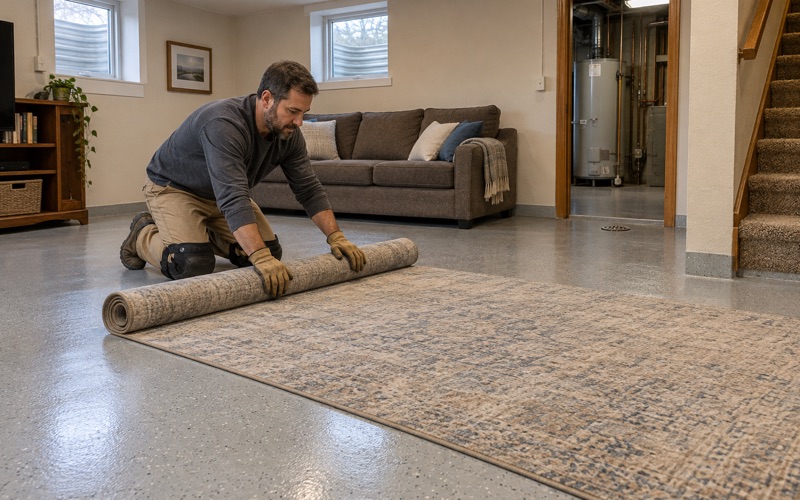
Radiant tubing in a basement slab makes the room comfortable, but it does not change what is happening below the concrete. Hydrostatic pressure and efflorescence are moisture problems, and we do not sell a floor coating as a fix for water coming up through a slab or as radon reduction. Testing comes first, and the coating decision follows from the numbers.
When the readings support a coating, a moisture-mitigation primer under a thin, temperature-rated system is often the right path. When they do not, we say so plainly and explain what would have to change before any finish will last.
Heated garages
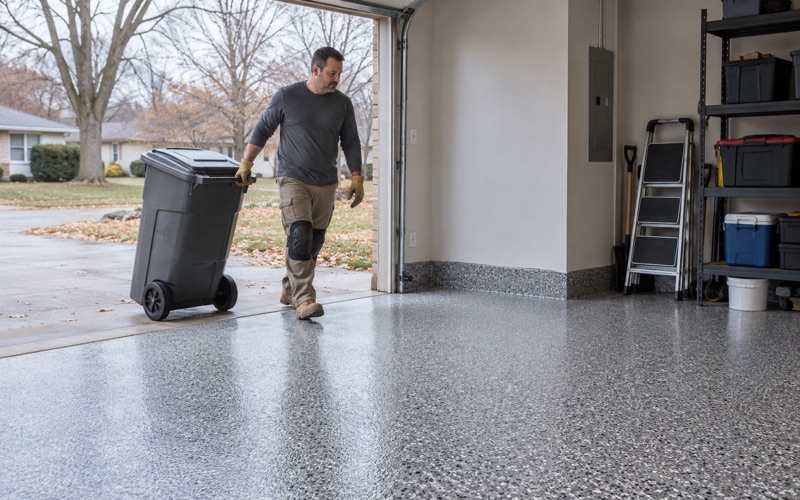
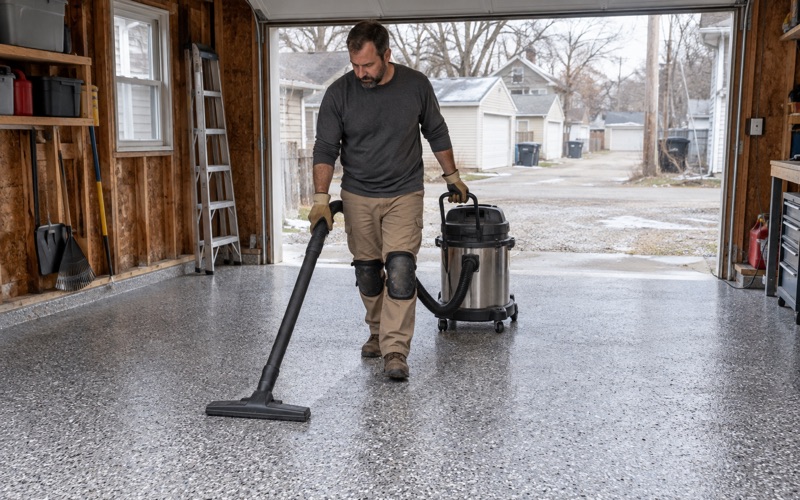
Some attached garages carry radiant tubing so snow and slush melt off a vehicle overnight. That warmth helps the floor dry, but it also means road salt and calcium chloride brine spend more time in liquid form on the surface. We build these garage floors with that in mind, using a topcoat suited to deicers and to hot tire pickup.
Every home job gets a written contract before a deposit is taken, with the products and any warranty written into it. On a heated garage, that contract also records the system’s finished thickness, so the homeowner has the same number the heating plan was checked against.
- 20+ Years Coating Concrete
- Moisture Testing in Every Scope
- Written Contract Before Any Deposit