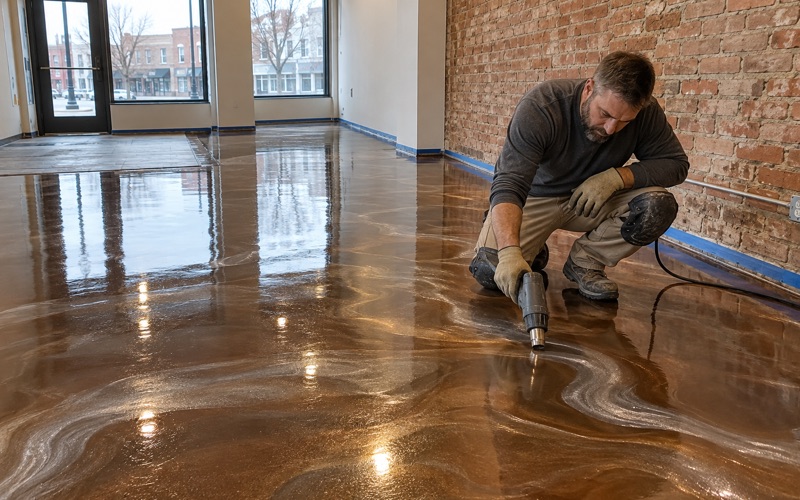
Waukesha Epoxy Flooring has spent more than 20 years on epoxy flooring in Milwaukee and across the region, and the question we start every job with is the same one: what is going to land on this floor? On a garage slab the answer is road salt and brine. Under a business jet it is fuel, oil and a hydraulic fluid that treats many coatings as something to dissolve.
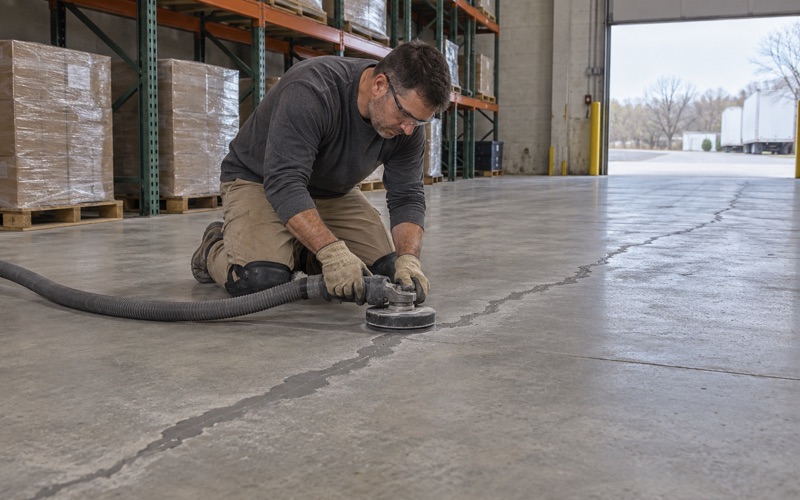
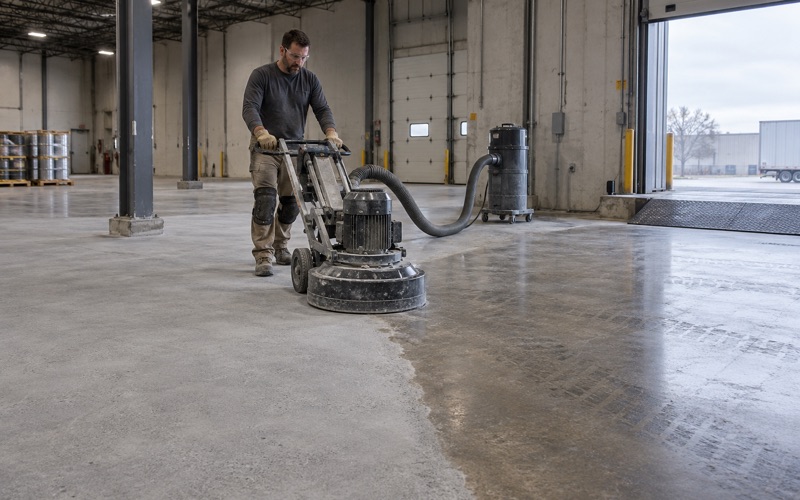
That question decides the system before color or finish ever comes up. We open every slab with a diamond grinder or shot blaster instead of acid, we put moisture testing on the proposal as its own line, and the written scope names the product, the build and the finished thickness so the owner can hold us to it.
This page covers the two kinds of Milwaukee floor we think about most: hangar and maintenance-shop floors at the airport, and the duplexes, detached homes and garages that make up most of the city’s housing.
Hangar Floors at Mitchell Airport
Milwaukee Mitchell International Airport sits inside the city, and Milwaukee County owns and operates it. Private hangars there are built on county ground leases, so the business that owns the building is a tenant of the county on the land underneath it. That arrangement shapes who has to be consulted before a floor is ground, coated or closed for a cure.
Corporate aviation at Mitchell has been growing. The 2023 Jet IN FBO project, an $11 million build, included 40,000 square feet of hangar and a 10,000-square-foot maintenance shop, and it was later bought by Jet Aviation. A Milwaukee County request for qualifications on redeveloping the northeast corner of the field envisions more than two dozen new hangars.
A New Corporate Hangar on Layton Avenue
Rite-Hite, a Milwaukee manufacturer, is replacing its hangar at the airport with a larger one. Urban Milwaukee reported in September 2024 that the plan calls for a 32,405-square-foot building at 1901 E. Layton Ave., at the northeast end of the airport, with about 23,500 square feet of hangar, a pilot office area, indoor parking and an indoor aircraft maintenance shop.
The same report says the company’s ground lease with Milwaukee County took effect in April 2024 and expands its airport space from just over 21,000 square feet to more than 100,000. Public registration records show Rite-Hite bought a Gulfstream G550 in March 2023. That combination, a business jet parked over a floor that also serves as a maintenance shop, is exactly the situation this page is about.
What a Hangar Floor Has to Survive
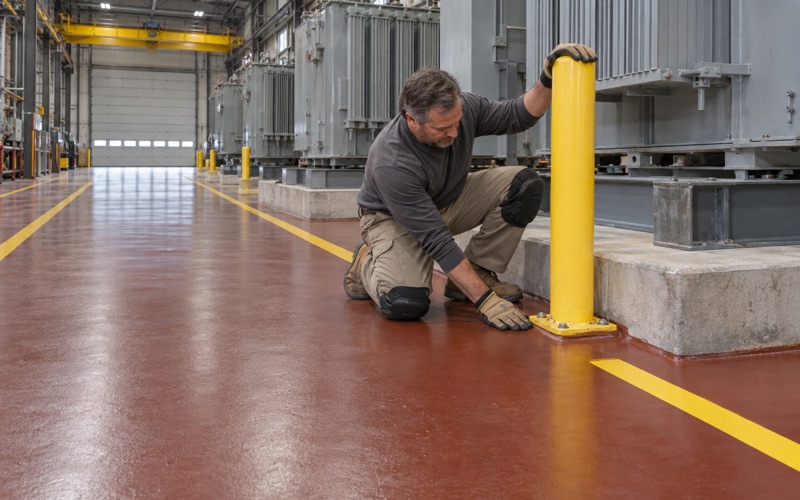
A hangar slab carries heavy point loads from landing gear and tugs, rolling tool carts, and the occasional dropped part. It also collects jet fuel, engine oil, cleaning solvents and hydraulic fluid, often in the same week. Each of those attacks a coating differently, which is why a hangar is specified fluid by fluid rather than with one generic heavy-duty label.
We treat the floor as a working surface for a maintenance crew, not a showroom. Broadcast quartz aggregate gives a mechanic secure footing when the floor is wet, and a light, even color makes a dropped fastener or a fresh drip easy to spot before someone tracks it across the bay.
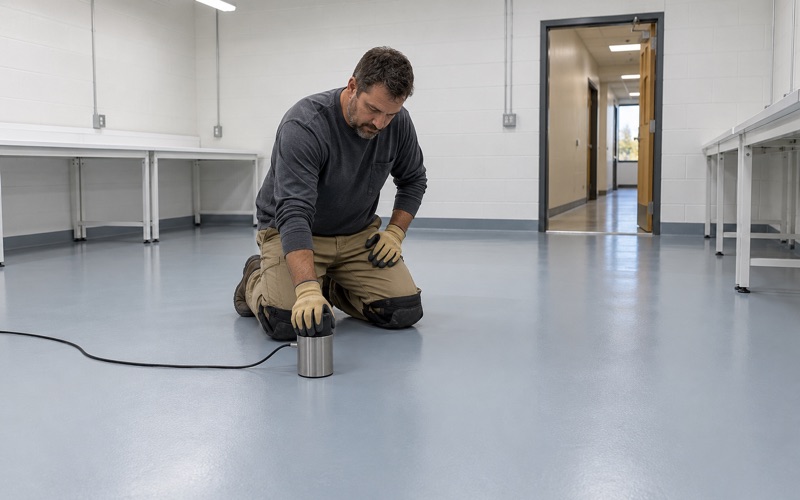
A new hangar slab brings its own timing problem. Fresh concrete keeps releasing moisture for months, and a coating sealed over it too early can blister or lose its bond. We measure the slab with in-situ relative humidity probes before committing to a date, and where the numbers are high, a moisture-mitigation primer goes into the written build rather than being added later.
Looking for epoxy-flooring closer to Menomonee Valley? See Epoxy-Flooring in Menomonee Valley.
Phosphate-Ester Hydraulic Fluid and the Floor Under a Jet
Many business jets run on phosphate-ester hydraulic fluid, sold under names such as Skydrol. Skydrol 500B-4 approval listings include Gulfstream airframes, with the G650 excluded, and LD-4 is listed without that exclusion. Which fluid any particular aircraft is serviced with is set by that aircraft’s maintenance manual, so we ask the operator rather than assume.
Phosphate-ester fluid is aggressive toward many paints, coatings, seals and plastics. The fluid maker’s own literature rates materials as excellent, good, poor or none for resistance, and it warns against deviating from recommended materials without consulting the airframe and component manufacturers. Technical overviews make the same point about floors: an incompatible finish can be damaged by a spill.
Why a Fuel-and-Oil Spec Falls Short
A floor system that shrugs off gasoline and motor oil can still soften, swell or lose gloss under phosphate-ester fluid. A garage-grade 100% solids epoxy with a standard topcoat was never asked to answer that question. For a hangar we start with the fluids the operator names, then select a base coat and a topcoat with documented resistance to them.
No floor coating is immune to hydraulic fluid, and we will not describe one that way. What the right system does is buy time: a drip that sits on a resistant topcoat for a reasonable period wipes up without leaving a soft spot. A drip that is ignored for days is a different matter on any floor, which is why cleanup belongs in the plan.
Cleaning Up a Drip Before It Becomes Damage
The practical rule on a hangar floor is prompt cleanup. Phosphate-ester fluid should be absorbed and removed soon after it lands, not left under a parked aircraft until the next wash. We talk through the cleanup routine with the operator when we hand the floor over, because how the floor is maintained matters as much as what went down on it.
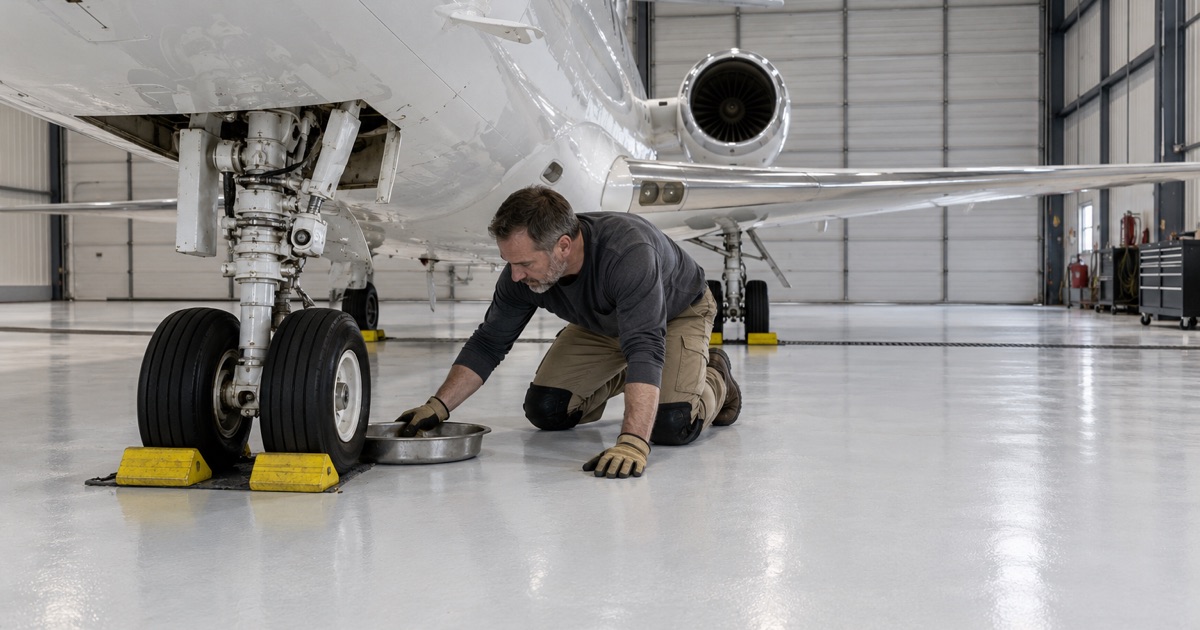
That conversation includes which cleaners are safe on the topcoat, how absorbent material is collected and disposed of, and where drip pans belong under the aircraft. A clean, light floor also turns a slow seep into something the crew sees on the first walk-through, which helps the aircraft as much as the coating.
Maintenance Shop Floors and Permits
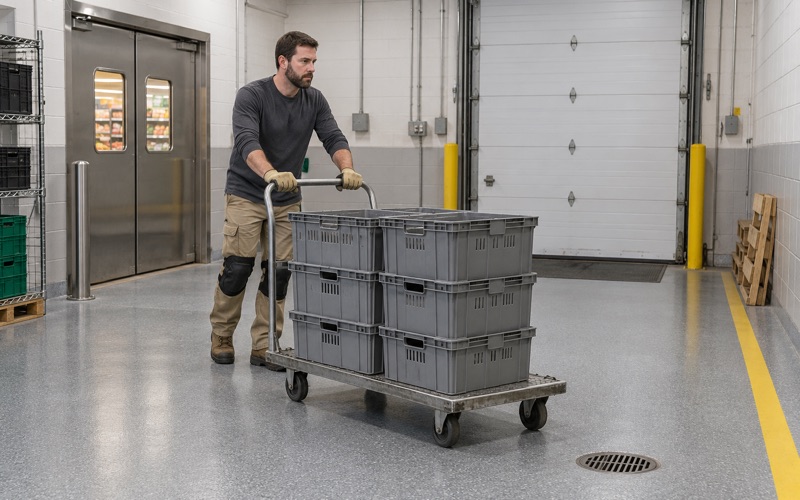
An indoor maintenance shop works harder than the hangar bay beside it. Parts washers, jack stands, tool carts and the steady movement of people concentrate wear in a smaller space, and the shop is where hydraulic lines are opened and fluids get handled most often.
Prep, Joints and Working Hours
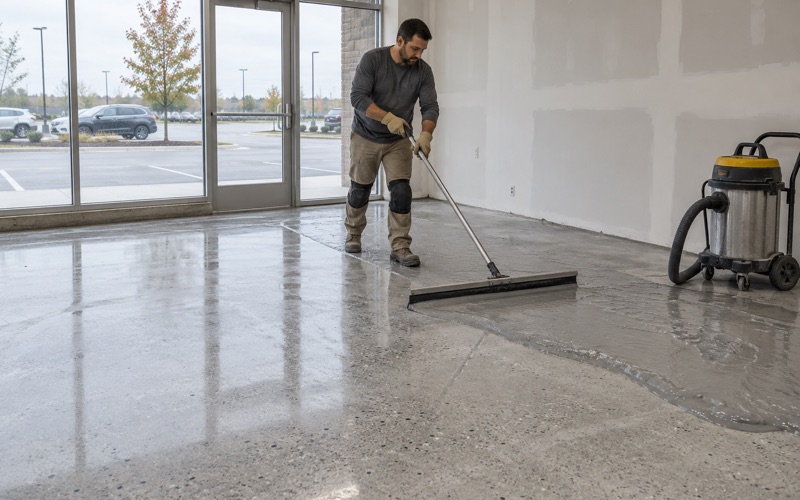
We grind or shot blast the shop slab to the surface profile the system calls for, and we fill control joints with a semirigid filler before any coating goes over them, so cart and jack wheels do not chip the joint edges. Cracks and old coatings get read before the quote, and if a section of slab needs repair first, we say so on paper.
An aviation tenant rarely wants a hangar out of service for long. We schedule the work around the flight calendar, including overnight and weekend windows, and we plan the cure against slab temperature and dew point rather than a fixed number of days. Grinding dust and slurry are collected on site and never sent down a trench drain.
The proposal for a shop floor lists each layer: primer, body coat, broadcast and topcoat, with the product names and the finished thickness. That gives the operator something to compare against the fluid list from the maintenance manual, and it gives a facilities manager a record to check years later when the floor needs a recoat rather than a full replacement.
City DNS, the County and Ozone Rules
Inside the city, construction and trade permits run through the Department of Neighborhood Services and its Permit and Development Center. Coating an existing floor and replacing a slab are different questions, so we ask before scheduling rather than guess. On airport property the county is the landowner, and its lease terms can add review steps of their own.
Air quality is another local factor. Milwaukee County is listed as a whole in the Milwaukee 2015 ozone nonattainment area, designated in July 2021 and classified Serious from January 2025. Wisconsin has no state architectural-coating VOC rule, so the federal national rule applies, and we keep product choices on the right side of it.
Milwaukee Homes, Duplexes and Garages
Most of Milwaukee lives in housing that has nothing to do with airplanes. Census five-year estimates count 135,297 of the city’s 232,520 occupied units as rented, so a typical floor job here involves a landlord, a tenant schedule, or both. The housing stock is old: 88,129 of the city’s 259,101 units were built in 1939 or earlier.
Two-Unit Buildings
Two-unit buildings account for 55,628 units, about 21.5 percent of the city’s housing. Their shared basements and rear garages are common places for a coating. A shared basement floor has to be scheduled around two households, and we work out access, ventilation and cure time with the owner before the first day so neither unit is surprised.
Older basement slabs often carry efflorescence, old paint or patches from decades of repairs. We test moisture on every basement slab before quoting, using a calcium chloride test or in-situ relative humidity probes, and we do not sell a coating as a fix for water coming up through the floor. Warranty exclusions, moisture from below first, are read out before the job is sold.
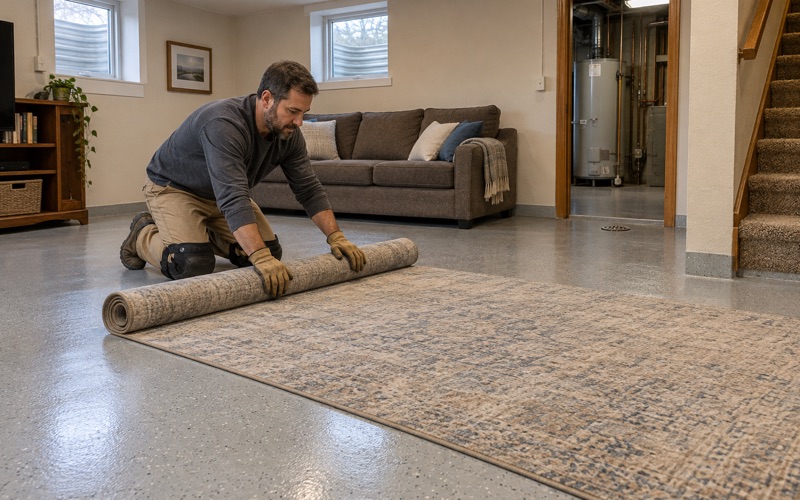
A landlord coating a duplex basement is usually after something practical: a floor that cleans easily between tenants and hides the wear of laundry and storage. A broadcast vinyl flake system does that well. Cracks are read and repaired before the coating, because a crack that keeps moving will show through any finish within a season or two.
Detached Homes and Garages
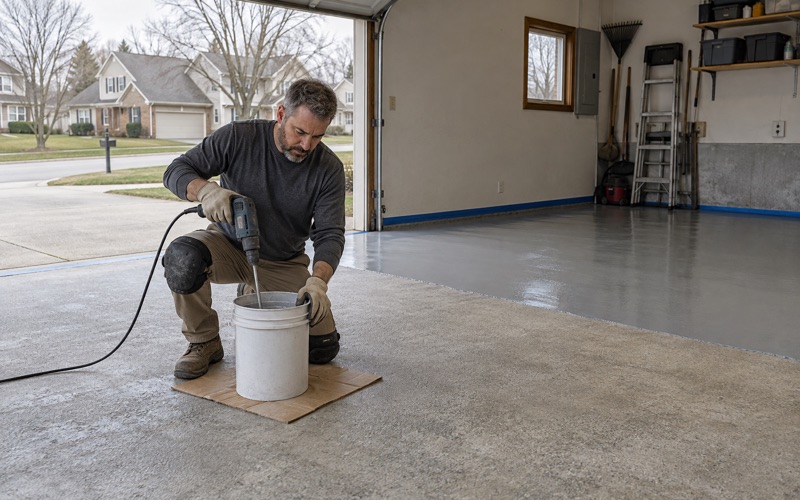
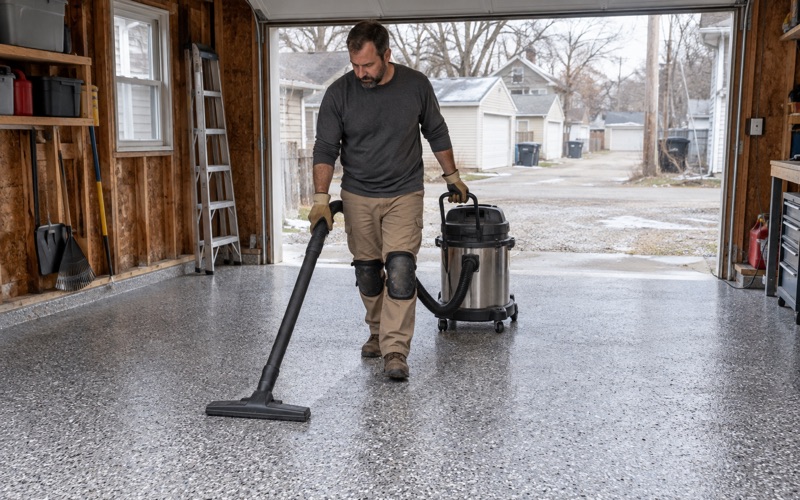
Owner-occupied detached houses number 73,493, and many have a detached or attached garage that takes salt-laden slush all winter. We build those floors for calcium chloride brine and rock salt, with a topcoat chosen to resist hot tire pickup, and we tell an owner plainly when an unheated garage has to wait for spring to cure properly.
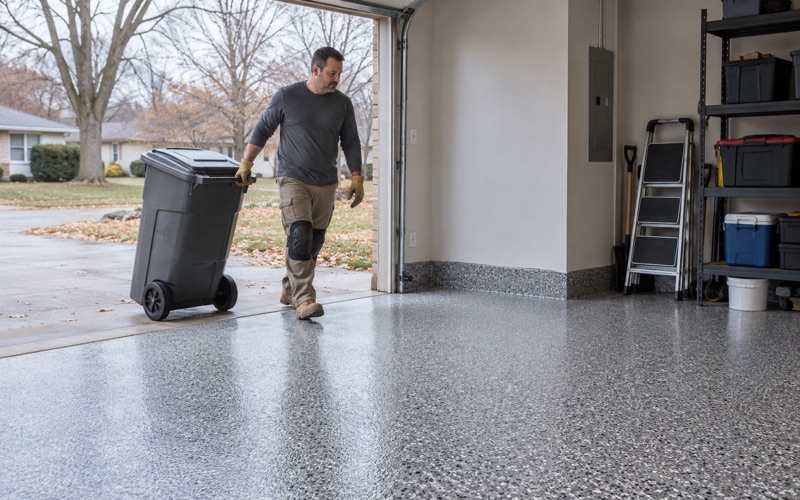
For most garages that means a 100% solids epoxy base with a polyaspartic topcoat, broadcast with vinyl flake for texture and to hide salt residue between washes. Older garage slabs that were sealed or painted years ago get ground back to clean concrete first, since a new coating bonds only as well as the surface underneath it.
Every home job gets a written contract before any deposit, with the products and warranty spelled out in it. Wisconsin does not require a vapor retarder under an unconditioned attached garage slab, so a dry-looking garage floor still gets tested. Where a slab is too far gone to hold a coating, we say that before anyone spends money on one.
- 20+ Years Coating Concrete
- Moisture Testing in Every Scope
- Written Contract Before Any Deposit