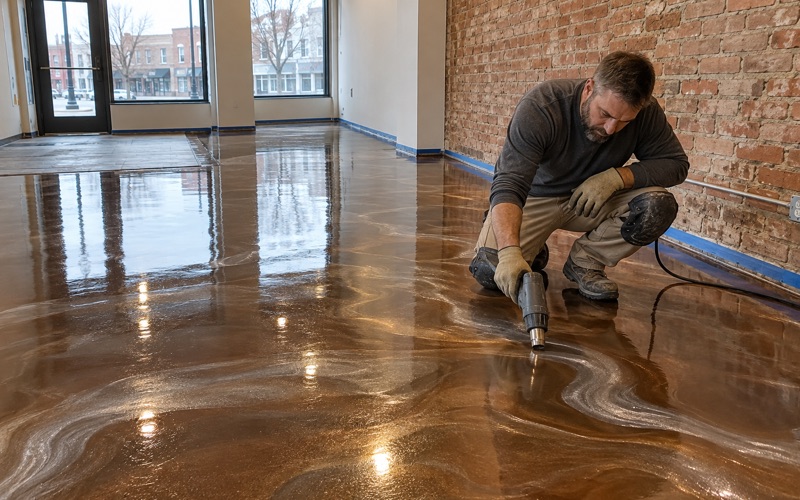
Waukesha Epoxy Flooring has handled epoxy flooring in Wauwatosa for owners of shops, plant space, garages and basements across more than 20 years in the trade, and most of what decides a floor here happens before the first coat is mixed. A slab gets read, tested and opened up first, because a coating can only be as sound as the concrete it bonds to.
On commercial work that usually means dealing with whatever the last user left behind in the concrete: cut-off steel, old grout, patched holes and oil. On homes it means older slabs, garages that take a full winter of brine, and basements where moisture from below decides which system is even possible. The work changes, but the order of operations does not.
Every proposal we write names the product, the system build and the finished thickness, so the floor that goes down can be checked against the one that was quoted. We profile concrete with a diamond grinder or a shot blaster rather than acid, and moisture testing sits in the scope as its own priced step. If a slab needs repair or replacement before it can carry a coating, the quote says so plainly.
A Single-User Plant Cut Into Tenant Bays
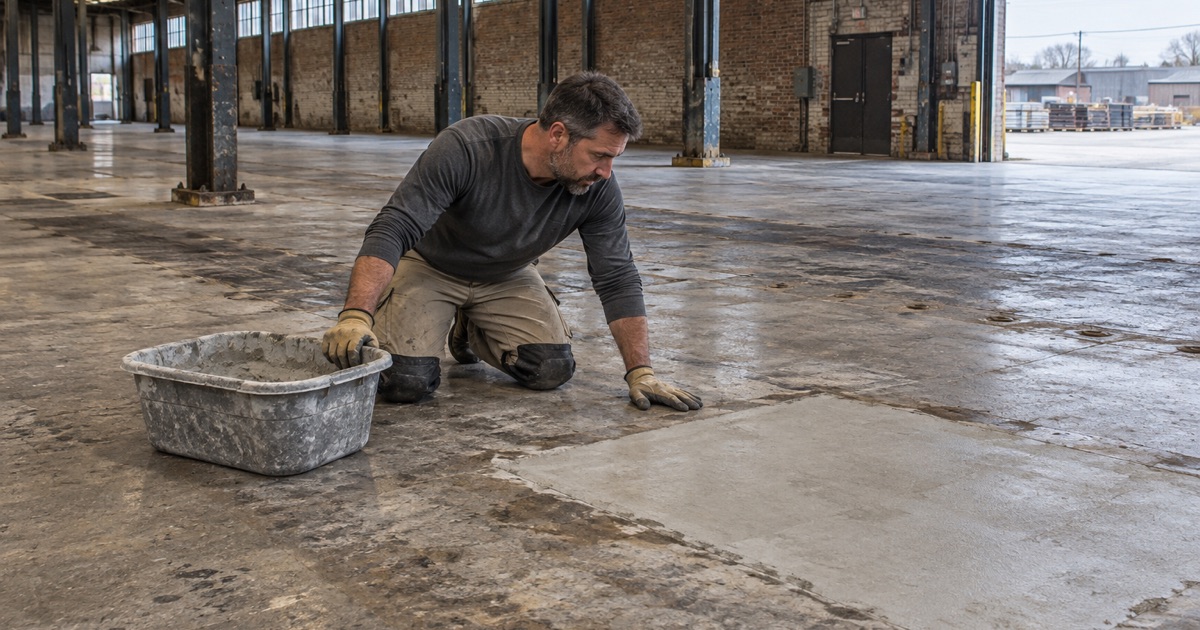
The largest floor story in Wauwatosa right now is not a new building. It is an old one being divided. When a plant built around one manufacturer is let in pieces to several companies, every new occupant starts with a slab that was laid out for somebody else’s machines, aisles and process lines.
The Former Briggs & Stratton Plant on 124th Street
The former Briggs & Stratton plant at 3300 N. 124th St. covers 1.2 million square feet on a 56-acre site, built for one engine and outdoor-power-equipment maker. Briggs sold the property to an affiliate of Phoenix Investors for just under $24 million in February 2022, in a sale-leaseback that left the company in place as a tenant for a time.
Briggs then terminated its lease on the northern portion of the plant and planned to leave the southern portion by the end of February 2024. It kept about 150,000 square feet for a large engineering and testing area. Phoenix has been renovating the complex and has said it is in active discussions with more than a dozen companies for portions of it.
What a New Tenant Actually Inherits
A bay carved out of a plant like that comes with a floor history. Where presses, test stands, conveyors and machining cells stood, the slab still carries their footprint: anchor bolts, grout pads, filled pits and trenches, and oil worked into the concrete along the old equipment lines. None of that disappears when the machines are hauled out.
For the incoming tenant, that history becomes the first line of the flooring scope. Before any primer or body coat is discussed, the old footprint has to be cut down, ground flush and patched, or the new floor will telegraph every bolt and seam back through its surface within months of going into service.
Working Around a Building That Stays Busy
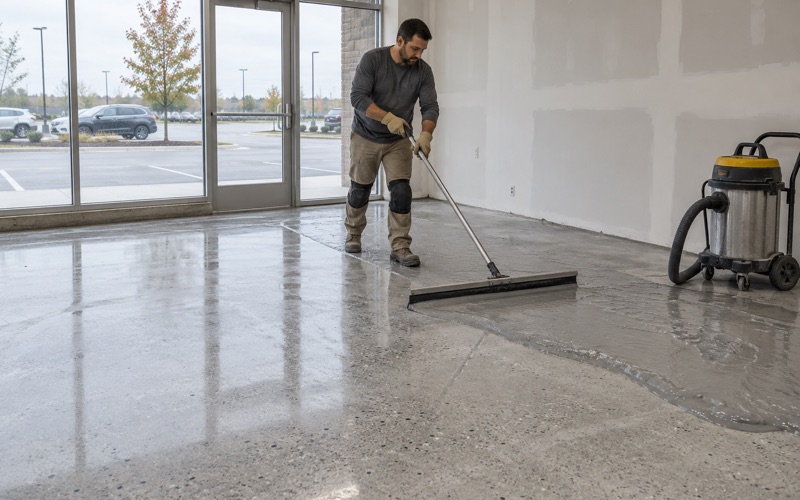
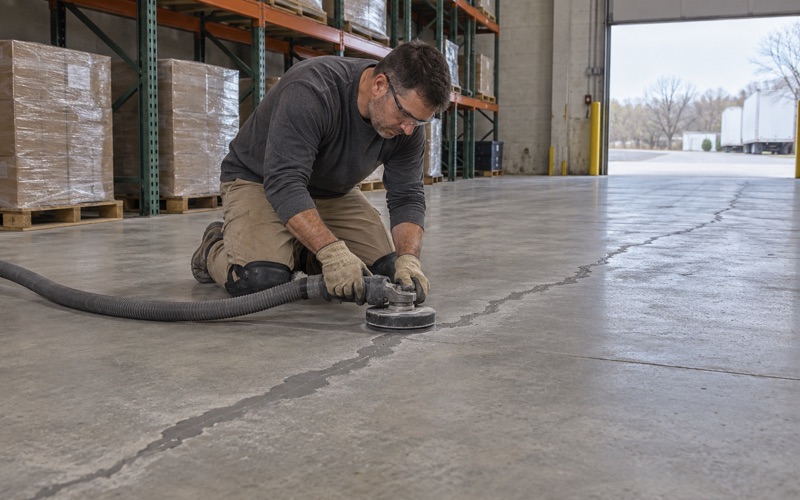
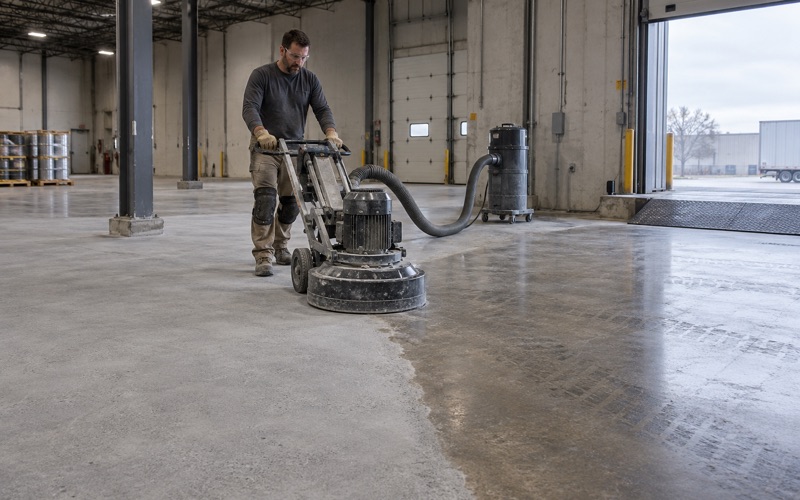
A multi-tenant building rarely goes quiet. One bay may be under renovation while the one beside it is already running a shift, and the engineering and testing space next door has its own schedule. We plan grinding, patching and coating around the hours the building has to keep operating, including overnight and weekend windows, and we collect dust at the grinder.
The same planning applies to smaller industrial and shop space elsewhere in the city. Wauwatosa also holds the Harley-Davidson Willie G. Davidson Product Development Center on W. Capitol Drive, a 210,000-square-foot building with testing laboratories and maintenance shops, which shows the kind of floor demands research and shop space brings to this side of the metro.
Looking for epoxy-flooring closer to Mukwonago? See Mukwonago Epoxy-Flooring.
Grinding Out Anchor Bolts and Patching Old Pits
This is where a re-let floor is won or lost. A coating system is thin compared to the steel and grout it has to cover, so every leftover piece of hardware either comes out, goes flush or gets built around on purpose. We walk the bay with the tenant’s layout in hand before we price any of it.
Anchor Bolts, Grout Pads and Equipment Bases
Anchor bolts left standing where machines were unbolted are trip hazards, forklift hazards and coating hazards all at once. We cut them below the surface, grind the stubs flush and fill the recess with a repair material compatible with the system going over it, so the finished floor reads as one plane rather than a field of dimples.
Grout pads and abandoned equipment bases take more work. Some lift cleanly with a grinder; others are bonded deep enough that saw cutting and chipping are the only way down to sound concrete. When a base hides a void, cracked concrete or a section that has lost its bond, we tell the tenant that the slab needs repair before a coating will hold there.
Filled Pits and Trenches as Patch Work
Old plants are full of pits and trenches that once held conveyors, coolant lines or machine foundations, and many were filled when the equipment came out. Those fills rarely match the surrounding slab in density, flatness or age, and the seam between old and new concrete is exactly where a coating cracks first.
We grind across the seam, check the fill for hollow spots and soft edges, and rebuild the transition with a patch material that matches the planned system. A filled pit is treated as patch work in the scope, with its own line, rather than as something a primer is expected to bridge on its own.
Joints and Transitions in the New Layout
A tenant bay usually gets new walls, new doors and a new traffic pattern, and those rarely line up with the original control joints. We map where carts and forklifts will actually cross joints in the new layout and fill them with a semirigid joint filler before coating, so wheels do not break down the edges.
Where a demising wall now cuts across a slab that was one continuous floor, we set clean terminations at the wall line. That keeps a coating failure in one bay from creeping under the partition into the neighbor’s space, and it gives each tenant a floor that can be maintained or renewed on its own schedule.
Oil-Soaked Machine Lines Before Any Coating
The hardware is visible. The oil often is not. Decades of lubricants, cutting fluids and hydraulic leaks soak into concrete along machine lines, and a slab that looks merely stained on top can still hold enough contamination below the surface to push a new coating off within weeks.
Why Oil Defeats Adhesion
Epoxy and urethane systems bond by soaking into an open, clean profile. Oil in the pores fills that profile from inside, so the primer sits on a film instead of on concrete. As the slab warms or the coating cures, contamination can wick back up, and the result shows as fisheyes, soft spots or a coating that peels in sheets along the old line.
That failure tends to follow the equipment footprint exactly, which is why we treat oil-soaked areas as their own scope item. A uniform prep across the whole bay would leave the worst concrete underprepared and spend effort where the slab never needed it.
Cleaning, Grinding and Proving the Stained Areas
We degrease heavily soaked zones, then grind or shot blast to the ICRI CSP profile the chosen system calls for, and repeat where oil keeps surfacing. Spots that will not come clean are cut out and patched. Grinding dust and slurry are collected on site and never washed into a floor drain or a storm sewer.
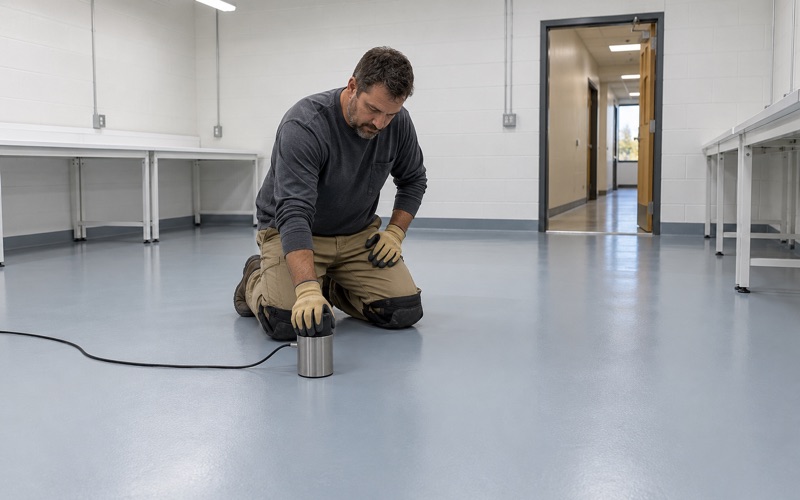
Before any coating goes down, we test the prepared slab rather than trusting its color. ASTM F1869 calcium chloride tests or ASTM F2170 in-situ relative humidity probes tell us what moisture is doing, and a sample area tells us whether the cleaned concrete will actually hold a bond.
Picking the System for the New Use
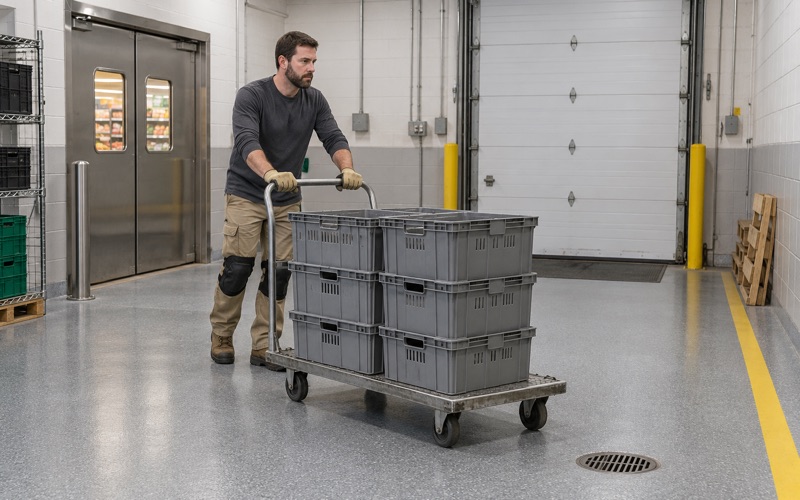
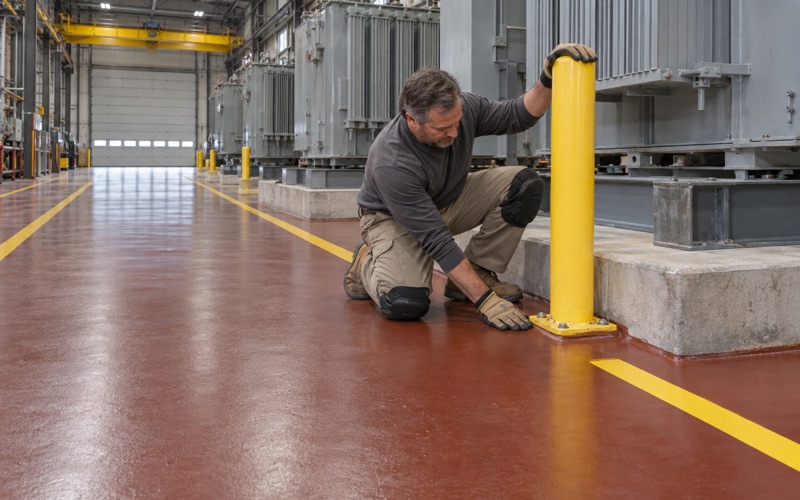
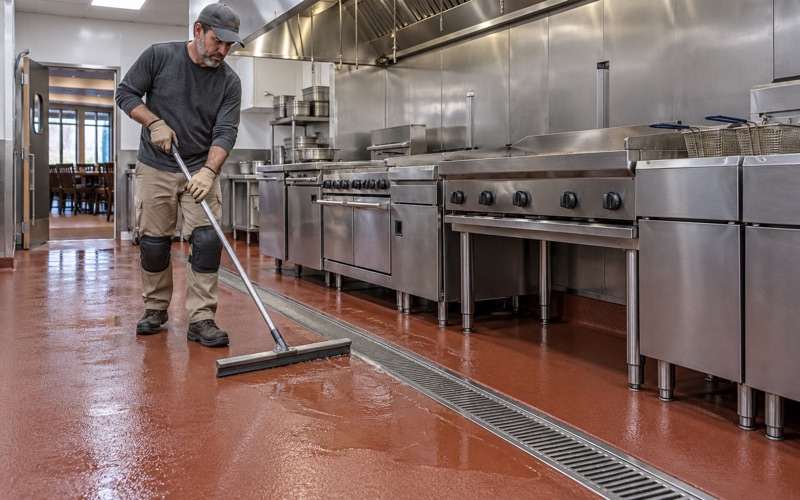
The next tenant’s work decides the build, not the last one’s. A warehouse floor may want 100% solids epoxy with a quartz aggregate broadcast for grip; an electronics or testing area may need static-dissipative flooring held to its specified resistance range; a wash-down room may suit urethane cement.
Milwaukee County sits whole-county in the Milwaukee 2015 ozone nonattainment area, reclassified Serious in January 2025, so we review product VOC content against the 40 CFR 59 Subpart D national architectural coatings rule. Low-odor systems also matter in a building where other tenants keep working.
Wauwatosa’s Older Homes, Two-Unit Buildings and Garages
Away from the industrial corridor, Wauwatosa is a city of older houses. It sits in Milwaukee County immediately west of Milwaukee, and its residential floors raise different questions than a plant bay does, starting with who owns the garage and what the slab has been through.
An Older, Two-Unit Housing Stock
Census figures show 29.0 percent of the city’s housing units date to 1939 or earlier, and two-unit buildings make up 11.4 percent of the stock, more than in the Waukesha County communities nearby. In a two-unit building, the garage or basement floor may be shared, so we confirm with the owner which areas are in scope before quoting.
We read cracks, joints and any old paint or coating on a residential slab before pricing it. Older garage floors often carry patches, settlement cracks or a previous coating that has lifted at the edges, and we would rather say up front that a section needs repair than coat over a problem that comes back.
Garage Floors and Winter Salt
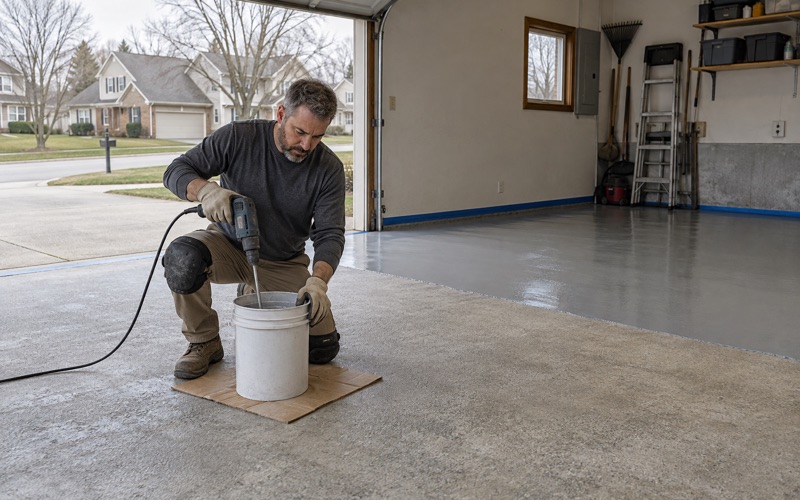
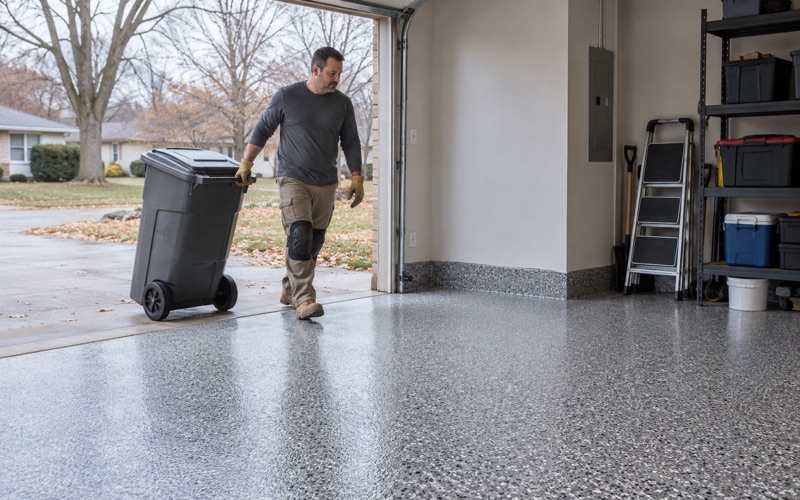
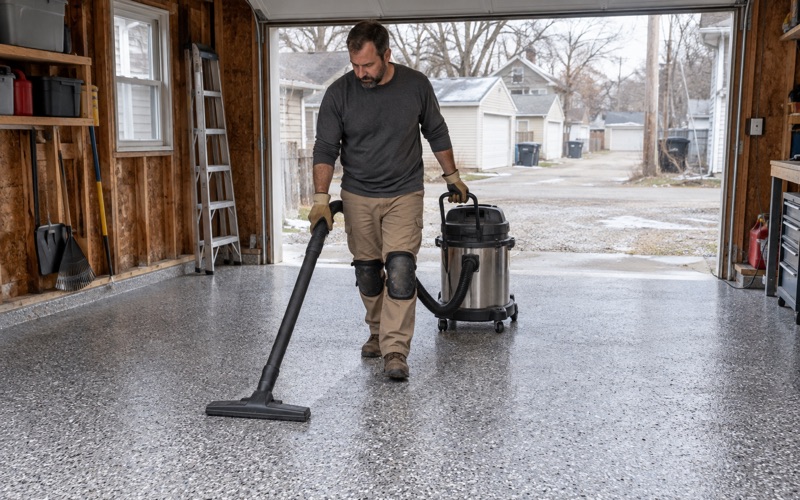
A Wauwatosa garage takes the same road salt and calcium chloride brine on its tires as any other in the region. We build garage systems to handle that, typically a 100% solids epoxy base with vinyl flake broadcast and a polyaspartic topcoat that resists hot tire pickup, and we schedule curing against slab temperature and dew point rather than the calendar.
Wisconsin does not require a vapor retarder under an unconditioned attached garage slab, under the SPS 322.38 exception, so a dry-looking garage floor is not proof of a dry one. We test before we coat. When an unheated garage is too cold to cure properly, we say so and book the job for spring.
Basements, Moisture and Permits
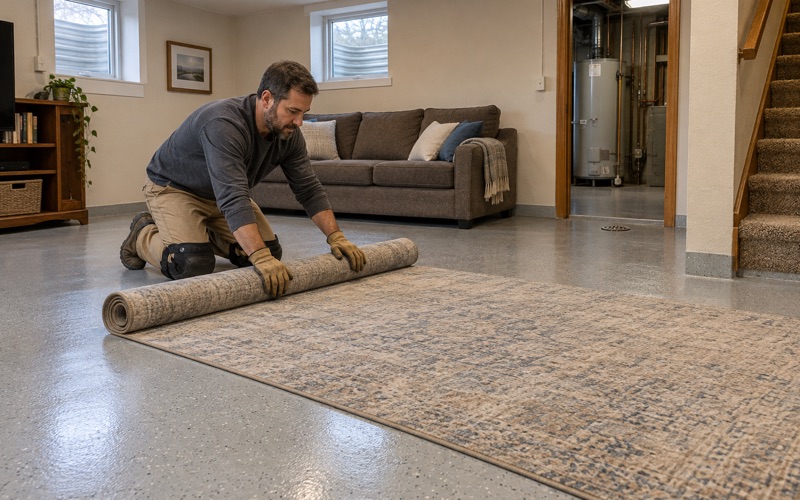
Basement slabs get the same moisture testing as garages, because hydrostatic pressure and efflorescence are what lift basement coatings. Where readings call for it, we use a moisture-mitigation primer. We do not sell a floor coating as radon reduction or as a fix for water coming up through a slab.
On home jobs, a written contract comes before any deposit, with products and warranty terms written in, and warranty exclusions are read out before the job is sold, moisture from below first. If a project goes beyond coating, such as replacing a slab, we ask the City of Wauwatosa building department whether a permit is needed before scheduling.
- 20+ Years Coating Concrete
- Moisture Testing in Every Scope
- Written Contract Before Any Deposit